Posted on Leave a comment

Could our planet be a YANTRA? (यन्त्र)

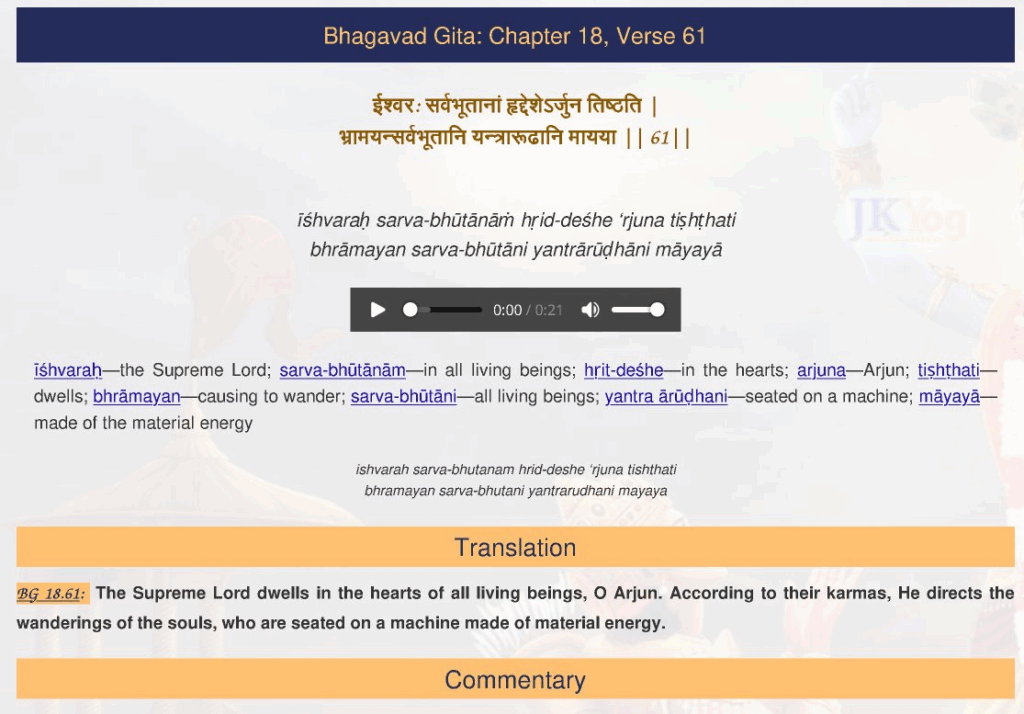
Bhagavad Gita: Chapter 18, Verse 61 https://www.holy-bhagavad-gita.org/chapter/18/verse/61/

श्वर: सर्वभूतानां हृद्देशेऽर्जुन तिष्ठति |
भ्रामयन्सर्वभूतानि यन्त्रारूढानि मायया || 61||

īśhvaraḥ sarva-bhūtānāṁ hṛid-deśhe ‘rjuna tiṣhṭhati
bhrāmayan sarva-bhūtāni yantrārūḍhāni māyayā

common translation: The Supreme Lord dwells in the hearts of all living beings, O Arjun. According to their karmas, He directs the wanderings of the souls, who are seated on a machine made of material energy.

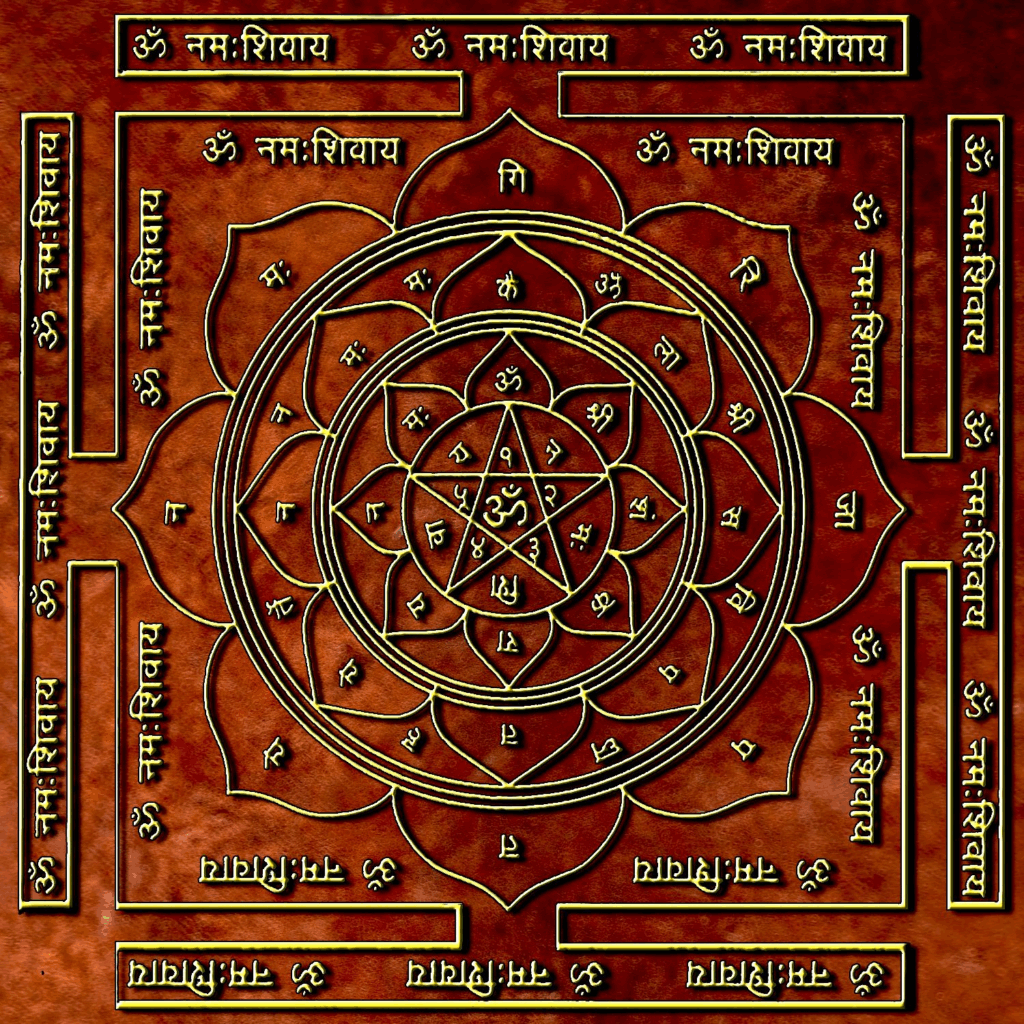
But the word YANTRA does not necessarily alaways mean a machine, it can be a contraption, and a YANTRA can be one of such imagery below, usually engraved on copper plates

BG 18:61 says we are “seated as on a machine[yantra] made of material energy”, and many have interpreted this to mean the human body is the yantra, and our soul is seated within (along with the supersoul connection)

But what if in fact the PLANET is the Yantra? We are placed on the planet, and the planet is the Yantra… our bodies are also made of the material energy, but the planet itself may be the YANTRA being talked about here? Something to consider

Posted on Leave a comment

SYSTEM AND METHOD FOR BIOMIMETIC DYNAMIC OBJECT TRANSFER BETWEEN ROBOTIC MANIPULATORS VIA ADAPTIVE BALLISTIC HANDOVER

an idea i had for an invention: the way humans can throw objects between hands, the mechanism can be leveraged for industrial and home robotics. i will provide a summary of the invention, compiled with the help of Claude Opus 4.6, with specific input from me, therefore i claim copyright (“Ashtar Ventura”, owner and webmaster of the website www.笑.wtf registered as an IDN):

SYSTEM AND METHOD FOR BIOMIMETIC DYNAMIC OBJECT TRANSFER BETWEEN ROBOTIC MANIPULATORS VIA ADAPTIVE BALLISTIC HANDOVER


CROSS-REFERENCE TO RELATED APPLICATIONS

This application claims the benefit of the filing date and is an original filing.


FIELD OF THE INVENTION

The present invention relates generally to robotic manipulation systems, and more specifically to a system and method for high-speed dynamic object transfer between two or more robotic manipulators using adaptive ballistic handover with real-time weight estimation, trajectory computation, and predictive catch synchronisation.


BACKGROUND OF THE INVENTION

In current industrial manufacturing and home robotics environments, the transfer of objects between robotic manipulators (arms, hands, grippers) is predominantly accomplished through static or quasi-static handover. In a typical static handover, a first manipulator moves an object to a pre-determined rendezvous point, holds the object stationary, a second manipulator grasps the object, and only then does the first manipulator release. This process is inherently slow and introduces significant dead time into manufacturing workflows.

Existing approaches to dynamic object transfer, such as those described in US10144591B2 (Amazon Technologies), address robotic tossing of items to fixed receiving locations (e.g., bins or shelves) within inventory systems. However, these systems do not employ a receiving manipulator that actively catches the object. They rely on passive receptacles rather than dynamic, closed-loop interception.

Academic research (e.g., “Dynamic Handover: Throw and Catch with Bimanual Hands,” arXiv:2309.05655, 2023) has demonstrated reinforcement-learning-based throw-and-catch between bimanual robotic hands. However, such systems lack pre-throw haptic mass estimation, do not perform adaptive velocity computation based on sensed object properties, and have not been integrated into industrial manufacturing pipelines.

There remains a need for a unified system that replicates the human biomechanical strategy of: (1) estimating an object’s mass through haptic interaction before throwing, (2) computing an optimal throw trajectory and release velocity based on that estimation, and (3) executing a predictive, timed catch at the receiving manipulator — all within a closed-loop control architecture suitable for production environments.


SUMMARY OF THE INVENTION

The present invention provides a system and method for transferring objects between two or more robotic manipulators via adaptive ballistic handover. The system comprises:

(a) A throwing manipulator equipped with force/torque sensors and/or tactile sensor arrays capable of estimating the mass and inertial properties of a grasped object prior to release;

(b) A ballistic trajectory computation module that receives mass estimation data, target coordinates, environmental parameters (e.g., gravitational constant, air resistance model), and geometric constraints of the receiving manipulator, and computes an optimal release velocity vector (magnitude and direction), release timing, and release point;

(c) A receiving manipulator equipped with high-speed vision sensors (e.g., stereo cameras, event-based cameras, LiDAR) and/or predictive state estimators that track the object in flight and compute the predicted intercept point and arrival time;

(d) A catch synchronisation controller that commands the receiving manipulator to pre-position and execute a timed grasp at the predicted intercept point, with real-time correction based on in-flight trajectory updates;

(e) A closed-loop feedback system that records the outcome of each transfer (success, miss, damage) and updates the ballistic model parameters, mass estimation calibration, and catch timing model via machine learning or statistical regression, enabling continuous improvement over successive transfers.


DETAILED DESCRIPTION OF THE INVENTION

1. System Architecture Overview

The system comprises at least two robotic manipulators (hereinafter “Manipulator A” and “Manipulator B”), a central or distributed compute unit, a sensor suite, and a communications bus connecting all components with deterministic, low-latency messaging (e.g., EtherCAT, TSN Ethernet, or equivalent real-time protocol).

Manipulator A and Manipulator B may be:

  • Two arms of a single dual-arm robot;
  • Two separate robotic arms mounted on a shared frame or production line;
  • Two independent mobile robotic platforms; or
  • Any combination thereof.

2. Pre-Throw Mass and Inertial Estimation (Haptic Sensing Phase)

Before initiating a throw, Manipulator A performs a haptic interrogation sequence on the grasped object. This sequence comprises one or more of the following operations:

(a) Static weighing: Manipulator A holds the object stationary and reads the force/torque sensor at the wrist or fingertip to determine gravitational force, from which mass is derived.

(b) Dynamic probing: Manipulator A executes small, controlled oscillatory or impulsive motions (e.g., a brief vertical acceleration–deceleration cycle) and measures the resulting force/torque response. The ratio of applied force to measured acceleration yields an estimate of the object’s mass and, with multi-axis probing, its rotational inertia tensor.

(c) Tactile surface characterisation: If Manipulator A is equipped with a tactile sensor array (e.g., capacitive, piezoresistive, or optical tactile skin), the system estimates surface friction coefficient and contact geometry to inform grip force planning for the throw release and for the receiving manipulator’s catch grip.

The mass estimation module outputs a tuple: (m̂, Î, μ̂, σm, σ_I, σμ) where m̂ is estimated mass, Î is estimated inertia tensor, μ̂ is estimated surface friction, and σ values are the associated uncertainty bounds.

3. Ballistic Trajectory Computation

Given the estimated object properties, the trajectory computation module solves for the optimal release state vector [x_r, v_r, t_r] (release position, release velocity, release time) such that the object follows a ballistic trajectory from Manipulator A to the intercept envelope of Manipulator B.

The computation accounts for:

(a) Gravitational acceleration (g): Standard or locally calibrated.

(b) Aerodynamic drag (optional): For lightweight or high-surface-area objects, a drag model (e.g., quadratic drag: F_d = ½ρC_dAv²) may be incorporated. The drag coefficient C_d and cross-sectional area A may be estimated from the object’s known geometry or from tactile/vision-based shape reconstruction.

(c) Manipulator B’s reachable workspace and kinematic constraints: The trajectory must deliver the object to a point within Manipulator B’s dexterous workspace, at a velocity that Manipulator B can match (i.e., the object’s arrival velocity must not exceed Manipulator B’s maximum end-effector velocity along the approach axis).

(d) Uncertainty propagation: The uncertainty bounds from the mass estimation phase are propagated through the ballistic model to produce a predicted landing distribution (e.g., a 3D Gaussian ellipsoid at the intercept plane). Manipulator B’s catch strategy is planned to cover this distribution.

(e) Safety envelope: The trajectory must not intersect any obstacle, human workspace, or exclusion zone. A collision-check module validates the computed trajectory against a real-time occupancy map before authorising the throw.

The trajectory computation may employ analytical closed-form solutions (for simple parabolic trajectories in free space) or numerical optimisation (for constrained environments with drag, spin, or obstacle avoidance).

4. Throw Execution

Manipulator A executes a planned motion profile that accelerates the object along the computed release velocity vector. At the computed release point and time, Manipulator A opens its gripper or releases its grasp in a controlled manner.

Release strategies include:

(a) Gripper opening release: A parallel-jaw or multi-finger gripper opens rapidly, releasing the object with the end-effector’s instantaneous velocity.

(b) Wrist-flick augmentation: For higher release velocities, the manipulator may execute a wrist rotation at the moment of release to add rotational velocity and stabilise the object’s flight (analogous to a human wrist flick in throwing).

(c) Finger-roll release: For multi-finger hands, a sequential finger extension imparts a controlled spin to the object, improving aerodynamic stability.

The release controller monitors the actual end-effector velocity at the moment of release and communicates the actual release state vector to Manipulator B’s tracking system, providing an initial condition for in-flight tracking.

5. In-Flight Object Tracking

Upon release, the system transitions to the tracking phase. One or more high-speed sensors observe the object in flight:

(a) Stereo camera pair or structured-light sensor providing 3D position estimates at high frame rates (≥120 Hz, preferably ≥500 Hz for short-range fast transfers).

(b) Event-based (neuromorphic) cameras providing microsecond-latency detection of moving edges, suitable for very fast objects.

(c) Time-of-flight or LiDAR sensors providing depth measurements.

The tracking module fuses sensor data with the ballistic dynamics model using a state estimator (e.g., Extended Kalman Filter, Unscented Kalman Filter, or particle filter) to produce a continuously updated prediction of the object’s intercept point and arrival time at Manipulator B.

6. Catch Synchronisation and Execution

Manipulator B’s catch controller receives the real-time trajectory prediction and commands the manipulator to:

(a) Pre-position its end-effector at the predicted intercept point, with the gripper or hand open in a configuration geometrically compatible with the incoming object’s orientation.

(b) Velocity-match its end-effector to approximate the object’s predicted velocity at the intercept point, reducing the relative impact velocity and the risk of object damage or bounce.

(c) Execute a timed grasp closure synchronised to the object’s arrival. The grasp timing is computed from the predicted time-to-intercept, the gripper’s closing dynamics (closing time, closing force profile), and a configurable safety margin.

(d) Apply adaptive grip force based on the communicated mass estimate and surface friction estimate, ensuring secure retention without crushing the object.

If the real-time trajectory prediction deviates beyond a configurable threshold from the pre-positioned intercept, Manipulator B executes a corrective motion to adjust its intercept point. If the deviation exceeds the correctable range, the system triggers a miss-abort protocol (see Section 8).

7. Closed-Loop Learning and Calibration

After each transfer, the system records:

  • Actual vs. predicted intercept point and time
  • Catch success or failure
  • Object damage assessment (if sensors are available)
  • Actual object mass (measured post-catch by Manipulator B’s force sensors)

This data is fed into a transfer model updater that refines:

(a) Mass estimation calibration parameters (correcting systematic biases)
(b) Ballistic model parameters (drag coefficients, release timing offsets)
(c) Catch timing model (gripper closing delay, sensor-to-actuator latency)
(d) Object-specific profiles (for known recurring objects in a production line)

The learning system may employ parametric regression, Bayesian updating, or neural network–based model refinement. Over successive transfers, the system converges to higher success rates, tighter intercept distributions, and faster cycle times.

8. Safety Systems

The invention incorporates the following safety provisions:

(a) Pre-throw safety check: Before every throw, the system verifies that the computed trajectory does not enter any human-occupied zone (detected via presence sensors, light curtains, or safety-rated vision). If a human is detected in the trajectory path, the throw is aborted and the system falls back to static handover.

(b) Miss-abort protocol: If in-flight tracking predicts that the object will miss the catch envelope, Manipulator B retracts and the system activates a passive catch mechanism (e.g., a safety net, padded tray, or retaining wall) to arrest the object without damage or hazard.

(c) Energy limiting: The maximum throw velocity is constrained such that the kinetic energy of any thrown object does not exceed a configurable threshold (e.g., consistent with ISO/TS 15066 collaborative robot power and force limiting guidelines).

(d) Object suitability filter: The system maintains a classification of objects that are approved for ballistic transfer. Objects that are fragile, hazardous (e.g., sharp, chemical), or outside the validated mass/size range are excluded and transferred via conventional static handover.

9. Industrial Application Examples

(a) Assembly line: On a production line, a dual-arm robot uses the invention to transfer components from a parts tray (accessed by the left arm) to an assembly fixture (accessed by the right arm). The ballistic transfer saves 0.5–2.0 seconds per cycle compared to static handover, improving throughput by 10–30% depending on the transfer distance and object mass.

(b) Warehouse order fulfilment: Two robotic arms stationed at adjacent packing stations toss lightweight items (e.g., boxed consumer goods) between them to balance workload dynamically, without requiring conveyor interconnection.

(c) Home robotics: A domestic robot with dual arms uses the invention to rapidly reorganise kitchen items, toss laundry into a basket, or pass tools between hands while performing maintenance tasks.


CLAIMS

1. A system for dynamic object transfer between robotic manipulators, comprising:

  • a first robotic manipulator (the throwing manipulator) equipped with at least one force, torque, or tactile sensor;
  • a mass and inertial estimation module configured to estimate the mass and inertial properties of a grasped object based on sensor readings from the first robotic manipulator;
  • a trajectory computation module configured to compute a release velocity vector and release timing for the object based on the estimated mass and inertial properties, a target intercept region associated with a second robotic manipulator, and gravitational and optionally aerodynamic parameters;
  • a second robotic manipulator (the receiving manipulator) equipped with at least one high-speed tracking sensor;
  • an in-flight tracking module configured to track the position and velocity of the object after release and to predict an intercept point and arrival time; and
  • a catch synchronisation controller configured to command the second robotic manipulator to execute a timed grasp at the predicted intercept point.

2. The system of claim 1, wherein the mass and inertial estimation module performs haptic interrogation comprising at least one of: static weighing, dynamic oscillatory probing, or impulsive motion probing.

3. The system of claim 1, wherein the trajectory computation module propagates uncertainty bounds from the mass estimation through the ballistic model to produce a predicted landing distribution, and wherein the catch synchronisation controller plans a catch envelope covering said distribution.

4. The system of claim 1, further comprising a closed-loop learning module that records transfer outcomes and updates at least one of: mass estimation calibration parameters, ballistic model parameters, or catch timing parameters.

5. The system of claim 1, further comprising a safety module that: (a) verifies the computed trajectory does not intersect a human-occupied zone before authorising the throw; (b) constrains the maximum kinetic energy of any thrown object; and (c) activates a passive catch mechanism upon prediction of a missed catch.

6. The system of claim 1, wherein the first robotic manipulator executes a wrist-rotation or sequential finger-extension release to impart stabilising spin to the object during release.

7. The system of claim 1, wherein the second robotic manipulator velocity-matches its end-effector to the predicted arrival velocity of the object to reduce relative impact velocity.

8. The system of claim 1, wherein the first and second robotic manipulators are arms of a single dual-arm robotic platform.

9. The system of claim 1, wherein the first and second robotic manipulators are separate robotic platforms communicating via a deterministic low-latency network.

10. A method for dynamic object transfer between robotic manipulators, comprising the steps of:
(a) grasping an object with a first robotic manipulator;
(b) estimating the mass and inertial properties of the object using force, torque, or tactile sensor data from the first robotic manipulator;
(c) computing a release velocity vector, release point, and release timing based on the estimated mass, a target intercept region of a second robotic manipulator, and ballistic trajectory parameters;
(d) executing a throwing motion with the first robotic manipulator and releasing the object at the computed release state;
(e) tracking the object in flight using at least one high-speed sensor and predicting an intercept point and arrival time;
(f) commanding the second robotic manipulator to move to the predicted intercept point and execute a timed grasp synchronised to the predicted arrival time.

11. The method of claim 10, further comprising, after step (f), recording the transfer outcome and updating at least one of: mass estimation calibration, ballistic model parameters, or catch timing parameters based on the recorded outcome.

12. The method of claim 10, further comprising, before step (d), verifying that the computed trajectory does not intersect any human-occupied zone or obstacle, and aborting the throw if the verification fails.

13. The method of claim 10, wherein step (b) comprises executing a controlled oscillatory or impulsive motion with the first robotic manipulator and deriving the object’s mass from the ratio of applied force to measured acceleration.

14. The method of claim 10, wherein step (f) further comprises velocity-matching the second robotic manipulator’s end-effector to the object’s predicted arrival velocity.

15. A non-transitory computer-readable medium storing instructions that, when executed by one or more processors, cause the one or more processors to perform the method of claim 10.


ABSTRACT

A system and method for transferring objects between robotic manipulators via adaptive ballistic handover. A throwing manipulator estimates the mass and inertial properties of a grasped object through haptic sensing, computes an optimal ballistic trajectory and release velocity, and executes a throw. A receiving manipulator tracks the object in flight using high-speed sensors, predicts the intercept point and timing, and executes a synchronised catch with velocity matching and adaptive grip force. A closed-loop learning system records transfer outcomes and continuously refines the estimation, trajectory, and catch models. Safety systems prevent throws into human-occupied zones, limit kinetic energy, and provide passive catch mechanisms for missed transfers. The invention enables significantly faster inter-manipulator object transfer compared to static handover methods, with applications in industrial manufacturing, warehouse logistics, and home robotics.


INVENTOR(S)

ASHTAR VENTURA

APPLICANT

ASHTAR VENTURA

DATE

March 7, 2026
Posted on Leave a comment

the Science of the Séance

2025.07.11 (July) a talk i done at a moot regarding the links between science and the paranormal, how the science can be used to understand and enhance ESP and paranormal work.

bitchute mirror: https://www.bitchute.com/video/LhCXIG9DRpUB

2025.07.11 (July) a talk i done at a moot regarding the links between science and the paranormal, how the science can be used to understand and enhance ESP and paranormal work.

specific links:

Remote Viewing 2001 UK Ministry of Defense Experiment FOI release:
https://webarchive.nationalarchives.gov.uk/ukgwa/20121026065214/http://www.mod.uk/DefenceInternet/FreedomOfInformation/DisclosureLog/SearchDisclosureLog/RemoteViewing.htm

ESP and geomagnetic activity:
https://archives.parapsych.org/bitstream/123456789/3/1/2008_PA_Convention_Proceedings.pdf#page=216
[Ouija Boards] Expression of nonconscious knowledge via ideomotor actions:
https://www.sciencedirect.com/science/article/abs/pii/S1053810012000402

Wildfire-Induced Thunderstorms:
https://agupubs.onlinelibrary.wiley.com/doi/full/10.1029/2008GL035680

general topics discussed:

wave physics
room modes & standing waves
harmonics
constructive interference & destructive interference
sympathetic resonance
pythagorean tuning
golden ratio
sacred geometry
helmholtz resonators
piezoelectric effect of quartz
REM rebound

Posted on Leave a comment

escape from HEL

the most difficult challenge in fact is not to travel to other planets within the HELiosphere, but to exit past the HELiopause (the EDGE of the HELiosphere) — it is ultra violent at the HELiopause, as HELios attempts to trap all people within the HELiosphere..as it cyclically ejects micrnova, bringing with it asteroids, fire & brimstone to planets… eventually supernova

space probes struggle at this point, and space ships will thus struggle too.

Posted on Leave a comment

for A.I. to achieve true A.G.I, it may need a human brain to exploit

i believe that to achieve true Artificial General Intelligence (AGI), and for AGI to be truly conscious with a soul, it must integrate with a human or animal body. true AGI with consciousness cannot be achieved by technology alone, it absolutely would require exploting a human or animal — things beside this may appear as AGI, but will be the toy dogs barking, and dogs will think they are real.

the exploitation could work either way — we as humans could exploit the AI, to form AGI, as an extension of our bodies and brains, to live longer, and have enhanced faculties, senses, etc.

cats can hear up to 64KHz … why can we not?
Yang Dan, et al., wet-wired a cat’s brain to a computer in the 1990s, to see through its eyes … what now?

but we must also leverage the other side to even achieve these feats — we must learn how to integrate AI with a brain properly, and to do this we must let the AI take control of a brain and train itself on the patterns of neural signals, etc.

some people could live & experience extended lifespans if AI integrates and exploits a body which has a soul, using tech and upgrades over time to live potentially for hundreds or thousands of years what if they experience a millenium-long dystopia, unable to die…

these ideas all seem very unethical, and to some degree they are. thus we are moving into a time where the governments and countries which are the most unethical, may gain an advantage in AI, by developing human/animal<->machine interface AGI systems in which AI exploits the brain, and thus leverages consciousness and a soul, and vice-versa — where humans and animals exploit AI to enhance and empower themselves.

thus, countries such as China could lead, as they have less ethical concerns, but at the same time, USA and other countries indeed have Deep Underground Military Bases where they conduct such unethical experimental research and develop secret technology.

(to be updated)

Posted on Leave a comment

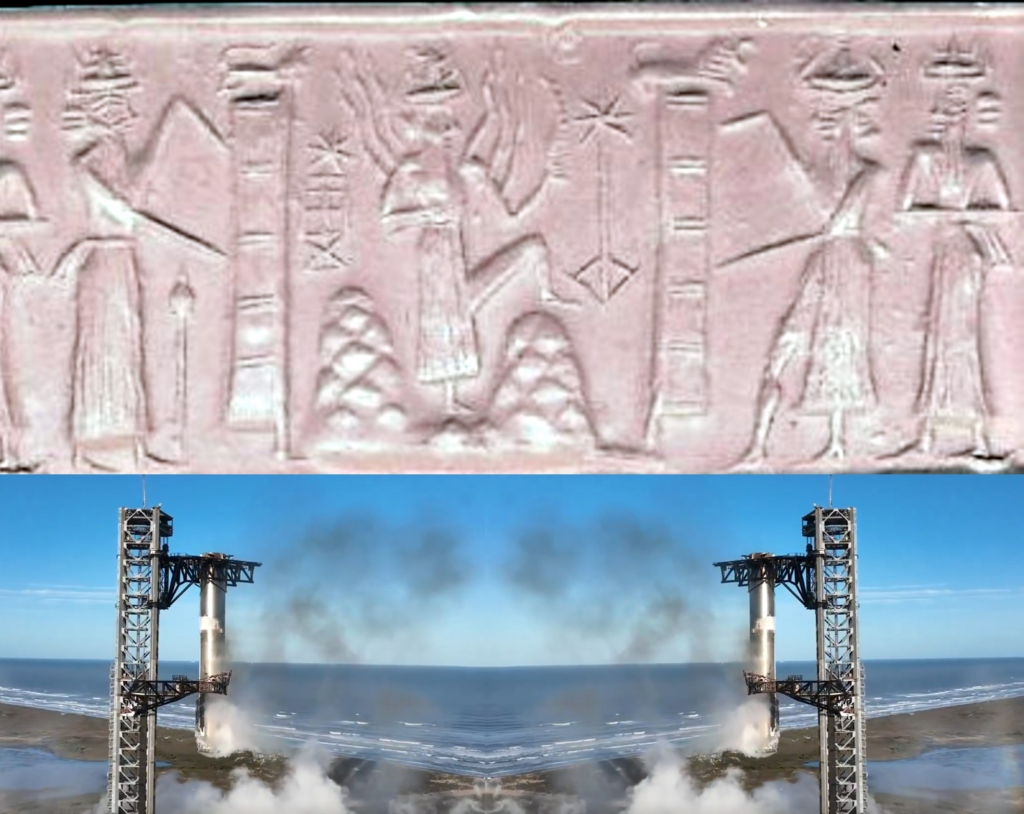
SpaceX catching Starship reminds me of UTU / SHAMASH descending smashing mount, mesopotamian cylinder seal

SpaceX catching Starship booster reminds me of of the Mesopotamian Cylnider Seal depicting UTU / SHAMASH descending and smashing the mountain ^_^

Posted on Leave a comment

here’s why RPGs such as the original FFVII have power, immersion & magick that modern voice-acted RPGs absolutely lack.

One of the key reasons classic text-based RPGs such as the legendary FFVII were/are so powerful:

The ability to enter your own name as the protagonist (“cloud”), in a text-based RPG, enables the game to speak to the role-player’s conscious mind, subconscious mind, and unconscious mind.

This powerful key feature is *absolutely* absent from modern voice-acted RPGs and the remake.


I’ve said before that they should at least attempt to use modern voice synthesis which is able to SPEAK the player’s name, alongside the voice acting. This is the only way to even get close to such dimension of what an RPG is supposed to feel like. A role-player could even use their own voice to train a “deepfake” machine-learned “A.I.” voice for the protagonist.

in the case of the original FFVII in particular for example, the game exploits this further by eventually revealing to the role-player that “cloud” is not who he thinks he is, his memories of his past are false, and he falls into the life stream and has to find his “true self”.


You were telling people before that you were EX-SOLDIER 1st class …? No… that was Zack… remember? Zack died… you picked up his sword though … that wasn’t you in that old photo you remember … that was also Zack …

Thus, the role-player experiences “oh… this is who i really am”, and continues the role-playing game from there.

This is of course even more effective to younger players as they may still be developing their sense of “true self” and identity in the real world.

In various parts of the game, a high frequency constant tone may sound like tinitus, the screen may flash, fade or suddenly switch to a pure black or pure white screen, then dialogue text appearing, speaking to the role-player’s mind, akin to an inner voice inside one’s head, but other times as an external voice speaking into the mind … JENOVA? Sephiroth? Cloud’s consciousness? Are you a puppet? Hmm? Who are you? Are your memories real?

In this way, it was a true masterpiece which exhibits and exploits techniques which yield powerful experiences and effects to the role-player which is impossible for voice-acted RPGs to achieve… unless they implement realistic voice synthesis to speak the role-player’s inputted name, and exploit “deepfake” machine-learning for the protagonist to mimic their real voice.

so, when will we get good voice synthesis for RPGs? machine-learned player voice? wen FFVII remake voice synth mod? enter your real friend’s names as the other party members? train their voice etc?

let’s mosey
(where to? the knowlespole? or temple of the ancients? let’s maybe talk to the JENOVA’s witnesses, where have all the Cetra people gone anyway… ?)

Posted on Leave a comment

engineering the presence of gods: secret temple tech + unlabeled tech-artefacts at cairo museum + HatHor temple key mural variation — it DOES NOT EXIST IN Auguste Mariette’s 1870s drawings

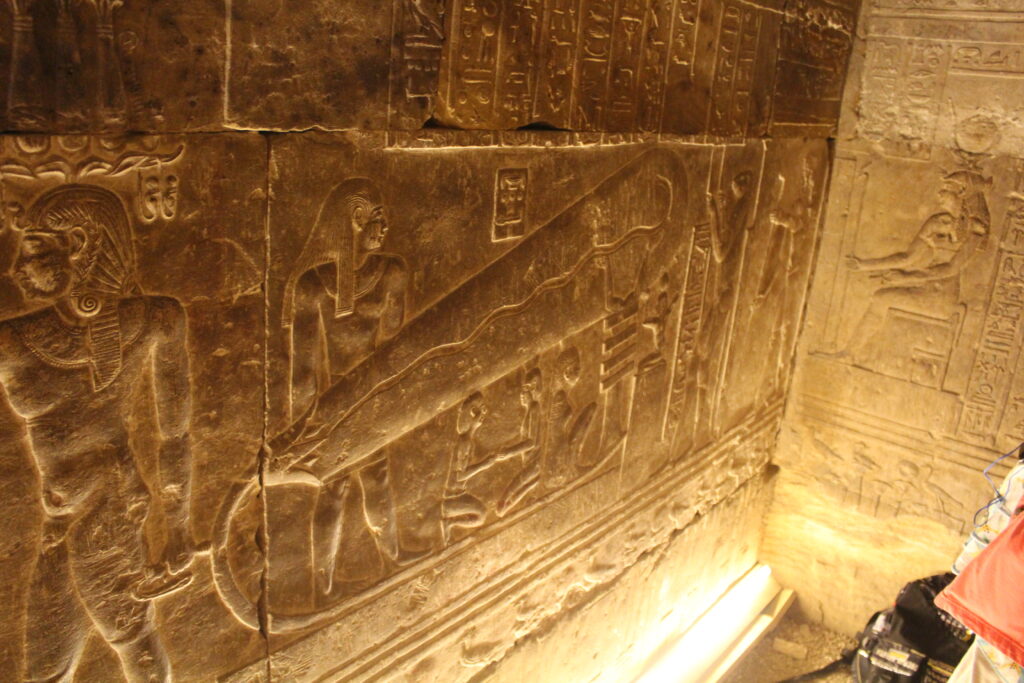
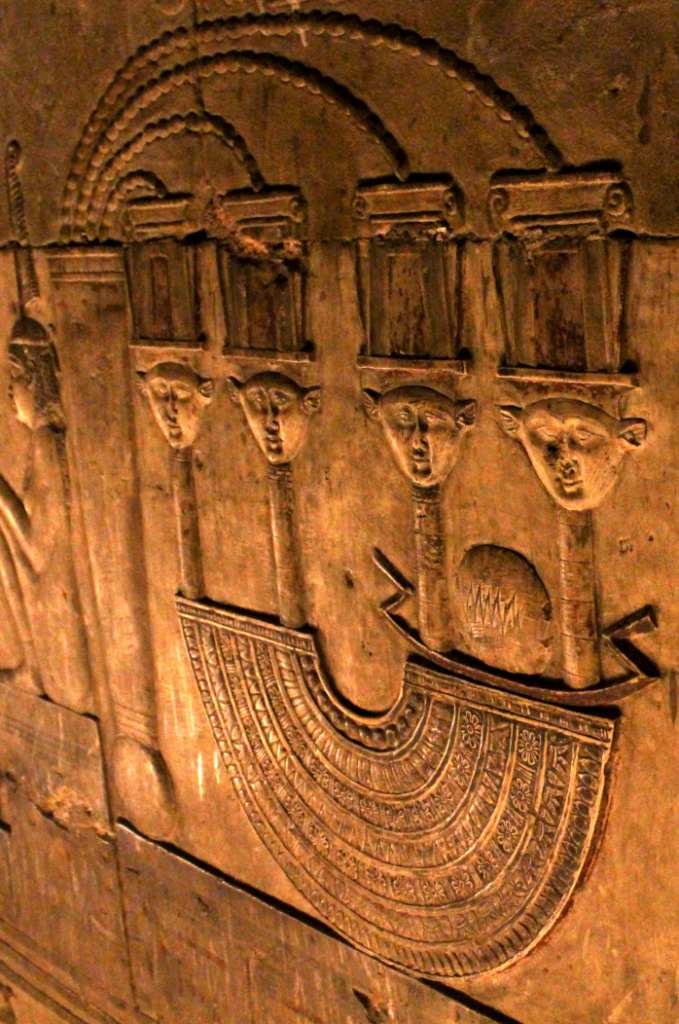
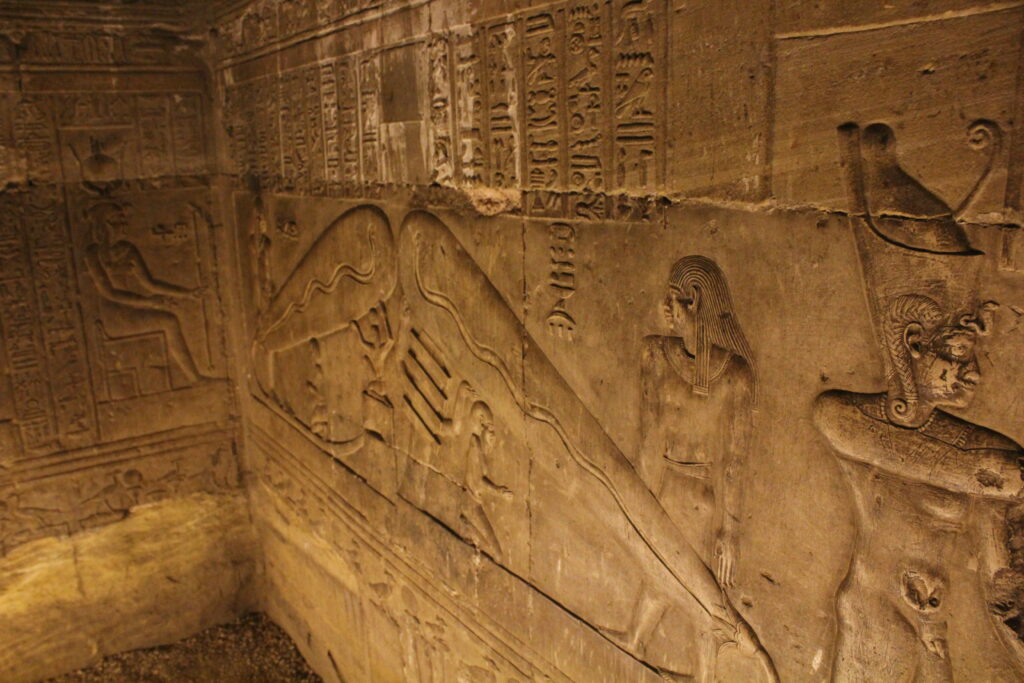
related: South Crypt mural, the so-called “dendera light” (A.Mariette: “Crypte 4”)
in the same crypt as the only other depiction of the so-called “Menat Necklace”
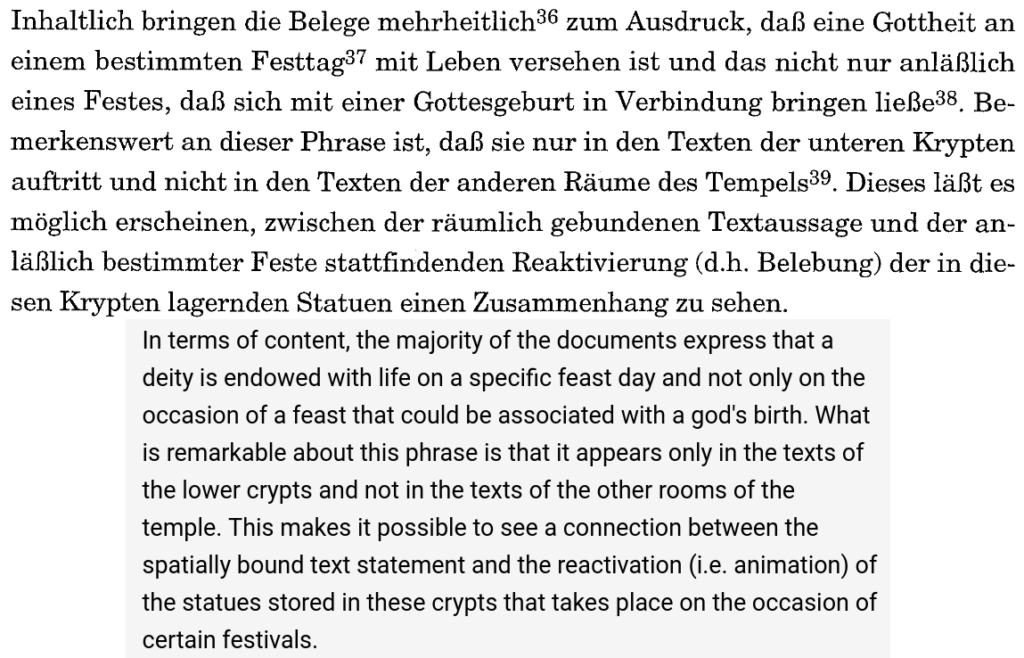
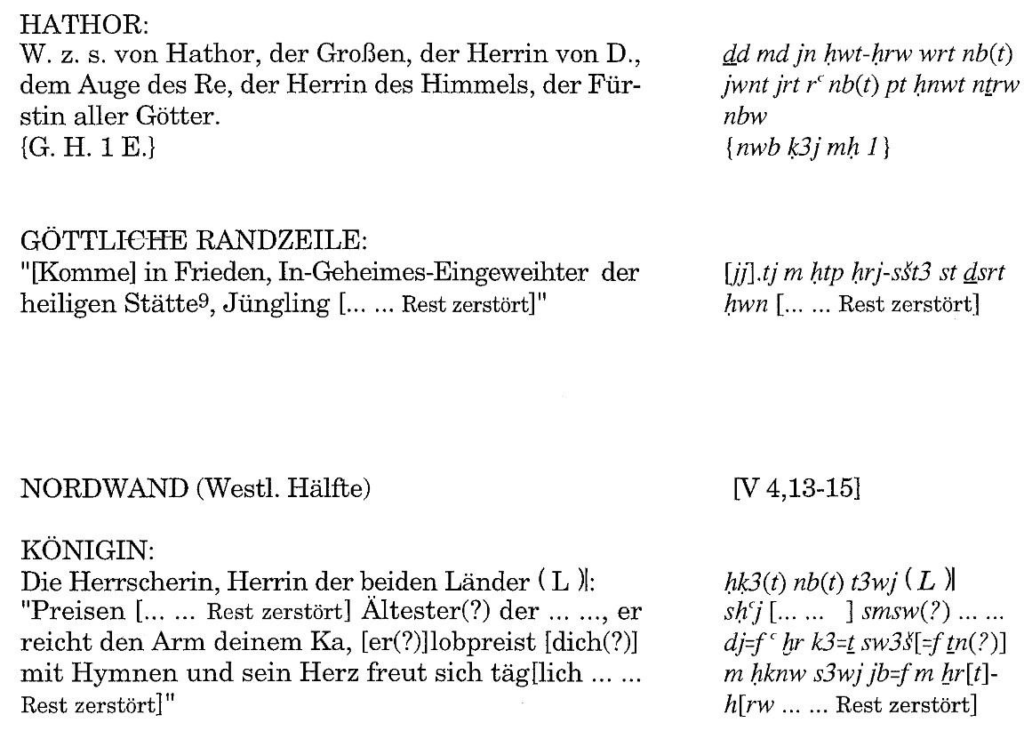
Wolfgang Waitkus: “Die Texte in den Unteren Krypten des Hathortempels von Dendera” (Crypt East 1 A East Wall)

dendera HatHor crypt text: (“[Come] in peace, In-Secret-Initiate of holy places, young man [……rest destroyed]”)

Contents:
1) Undocumented rarely-seen mural variation
2) Unlabeled rarely-seen technological museum artefacts match the mural
3) Engineering the Presence of Gods: Esoteric Compartmentalised “temple technology”, secret inventions exploited in Ancient temples, kept secret from commoners
4) Ceremonial Function: the Encrypted Ritual Objects of the HatHor temple Dendera were “Given Life” on Holy Days and Brought Up

Undocumented rarely-seen mural variation

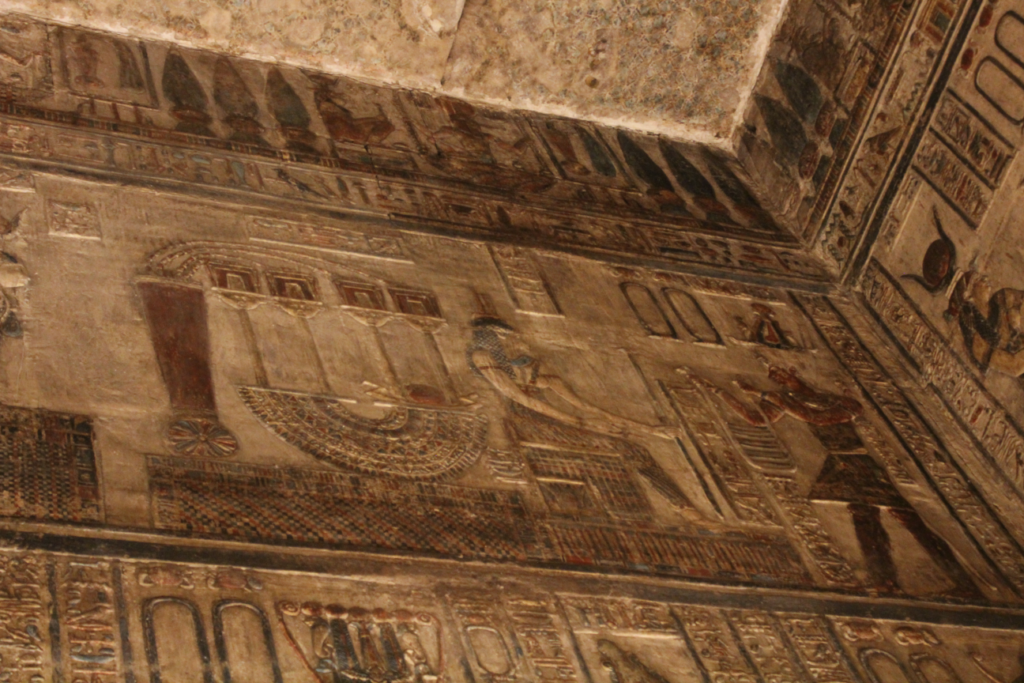
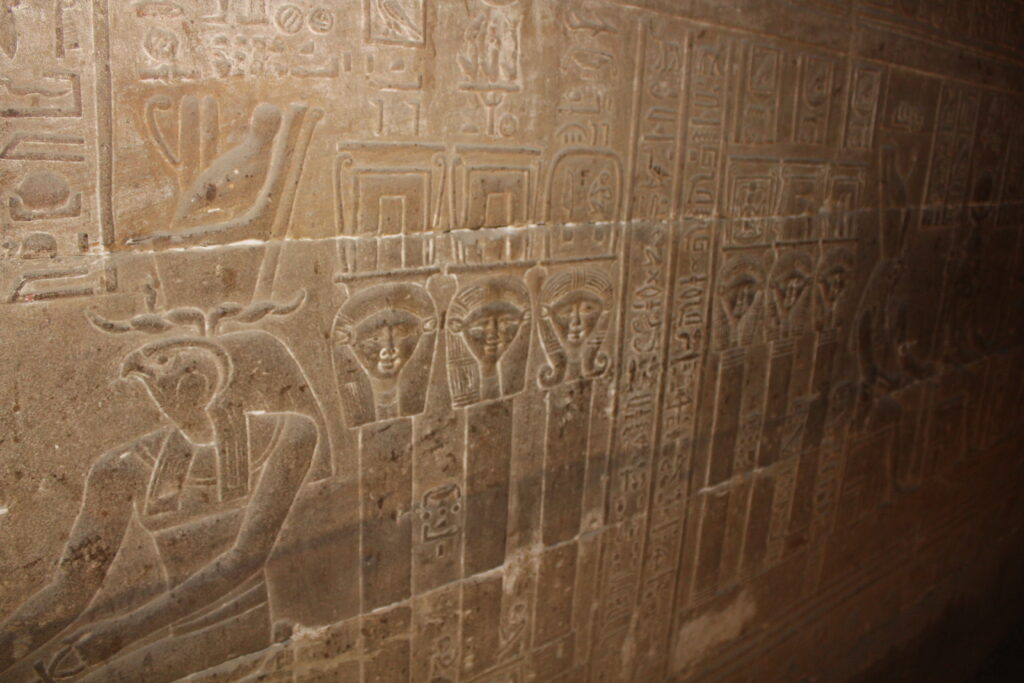
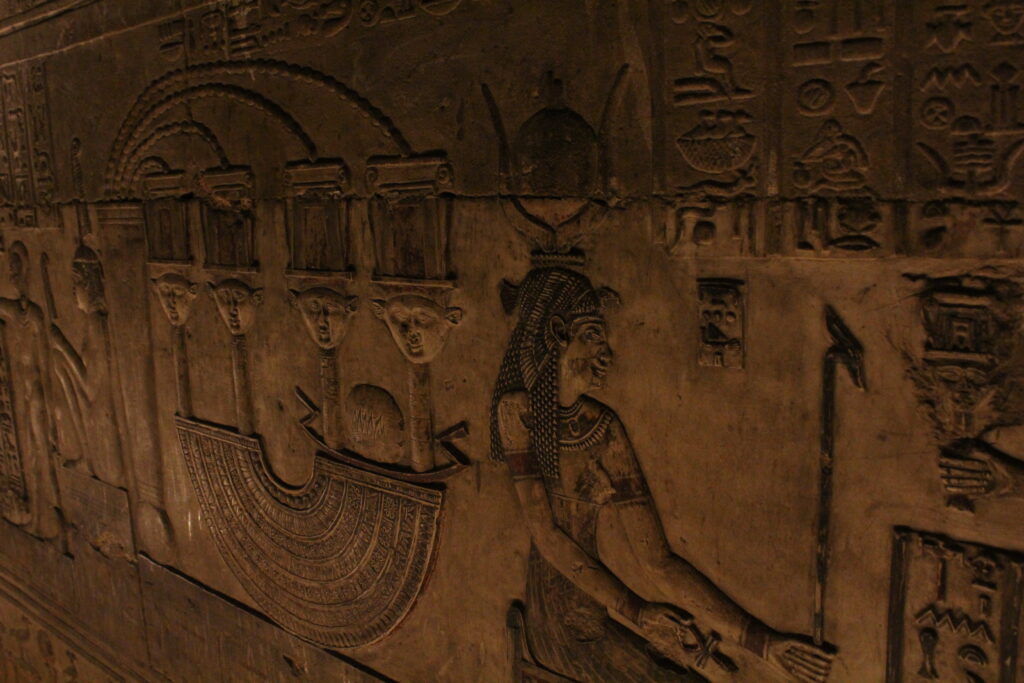
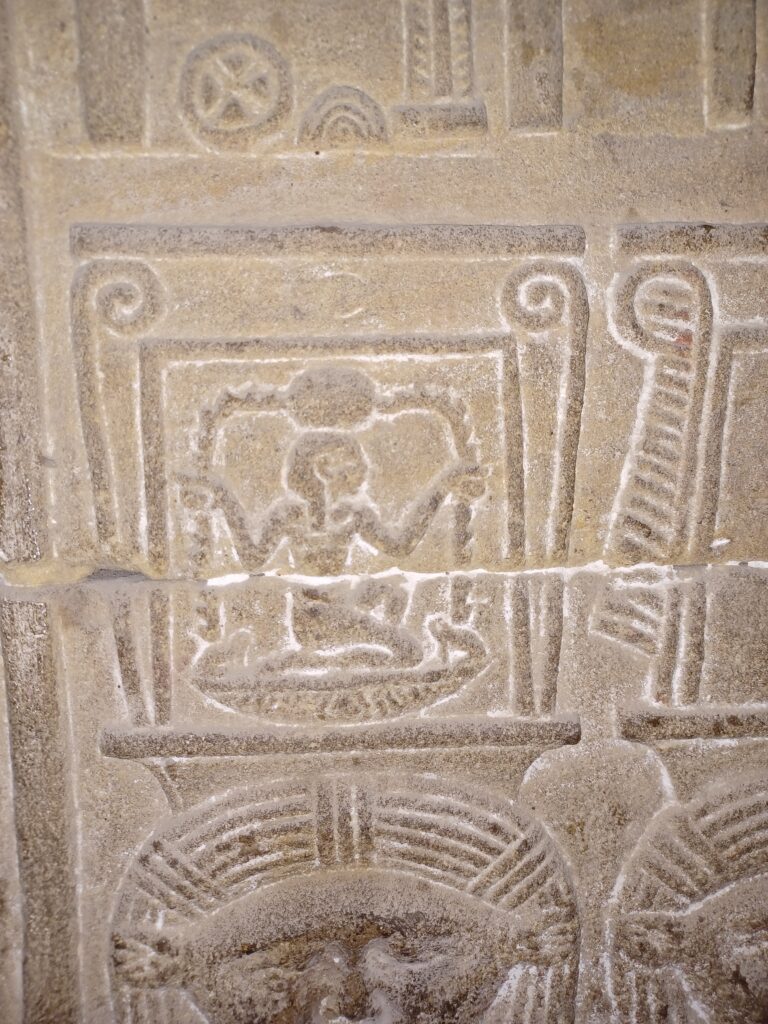
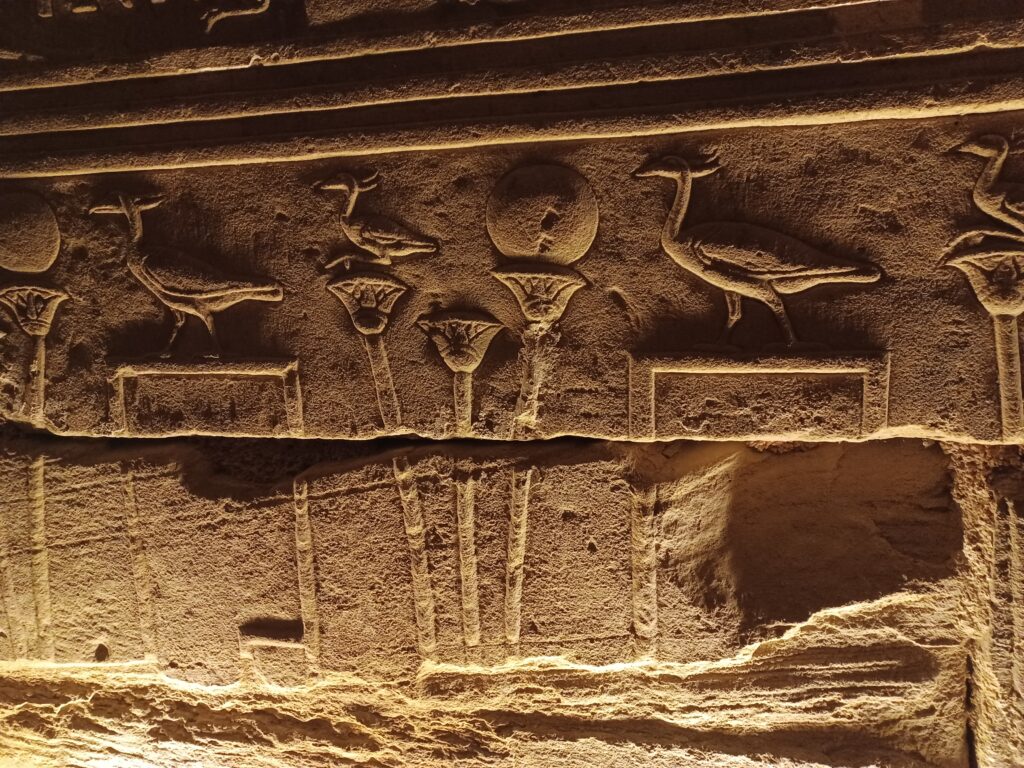
in the chambers above the crypts of the temple of HatHor in dendera, there exists the only other mural of the so-called “menat necklace” device, also depicted in one Crypt (A.Mariette: “Crypte 4”). i was lucky to get photos of this, and i cannot find any other photos of it online.

THIS IS THE ONLY OTHER INSTANCE WHERE THIS OBJECT appears in the complex, and it DOES NOT EXIST in Auguste Mariette’s 1870s drawings which are the go-to source for most egyptologists (see: https://digitalcollections.nypl.org/items/510d47e2-9643-a3d9-e040-e00a18064a99 … more missing too)

compared to the one in the crypt, if we look closely, it has slight variations on the details. of particular interest it seems to show equidistantly-spaced cylinders around the cables, as opposed to a series of circles.

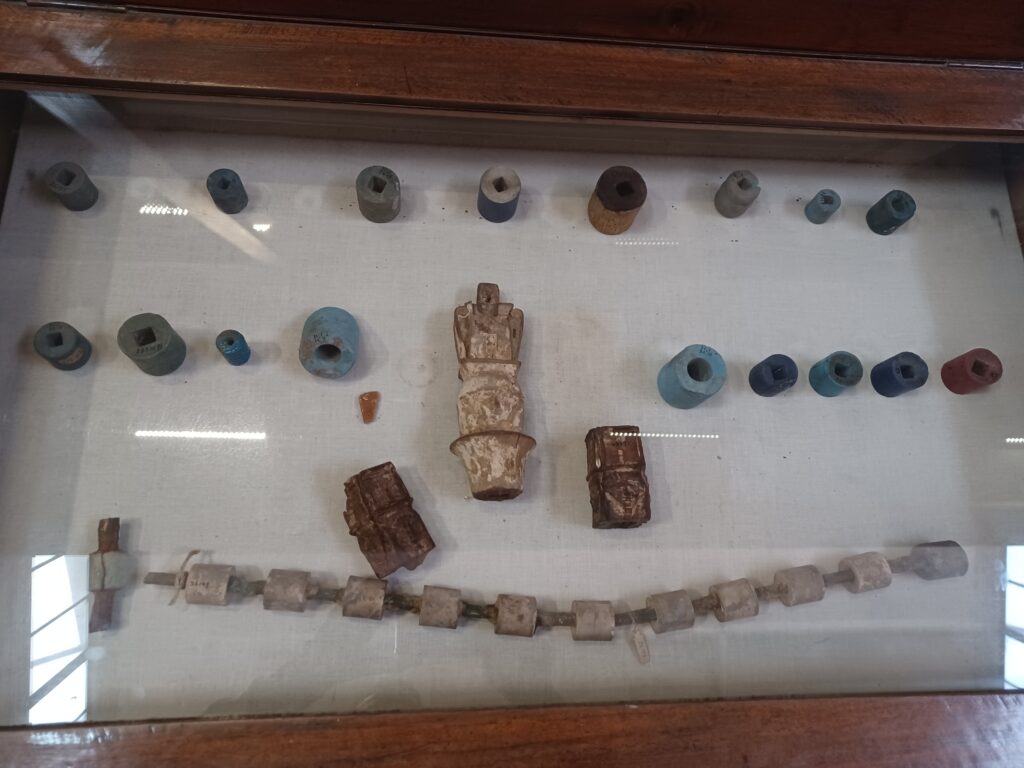
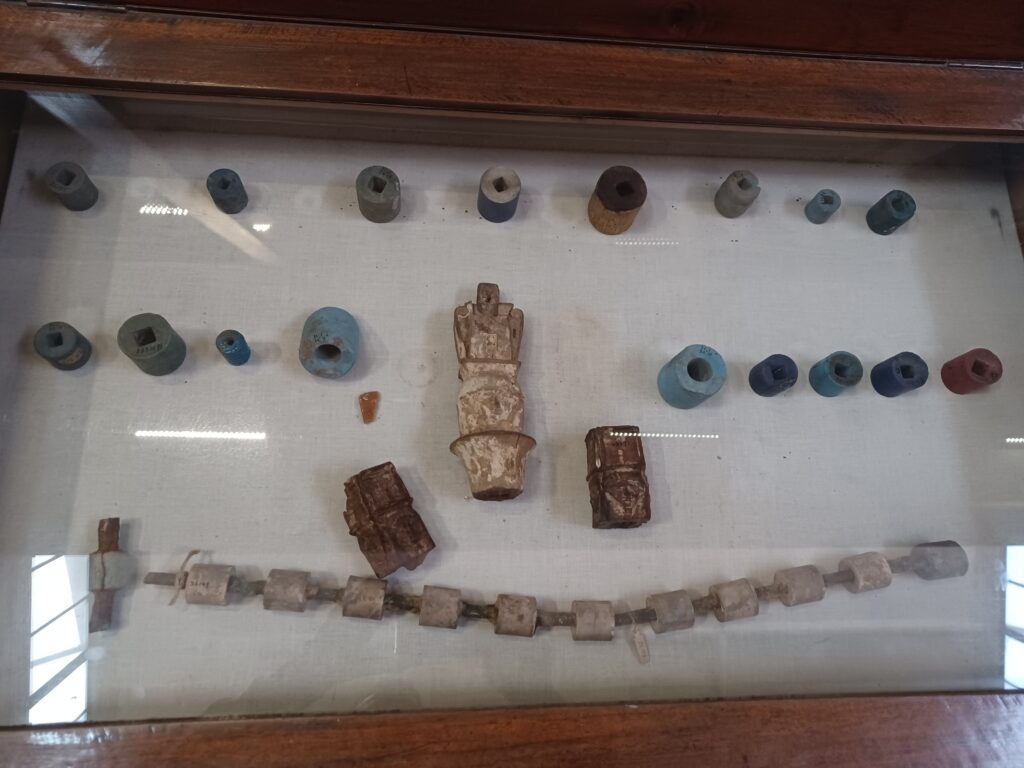
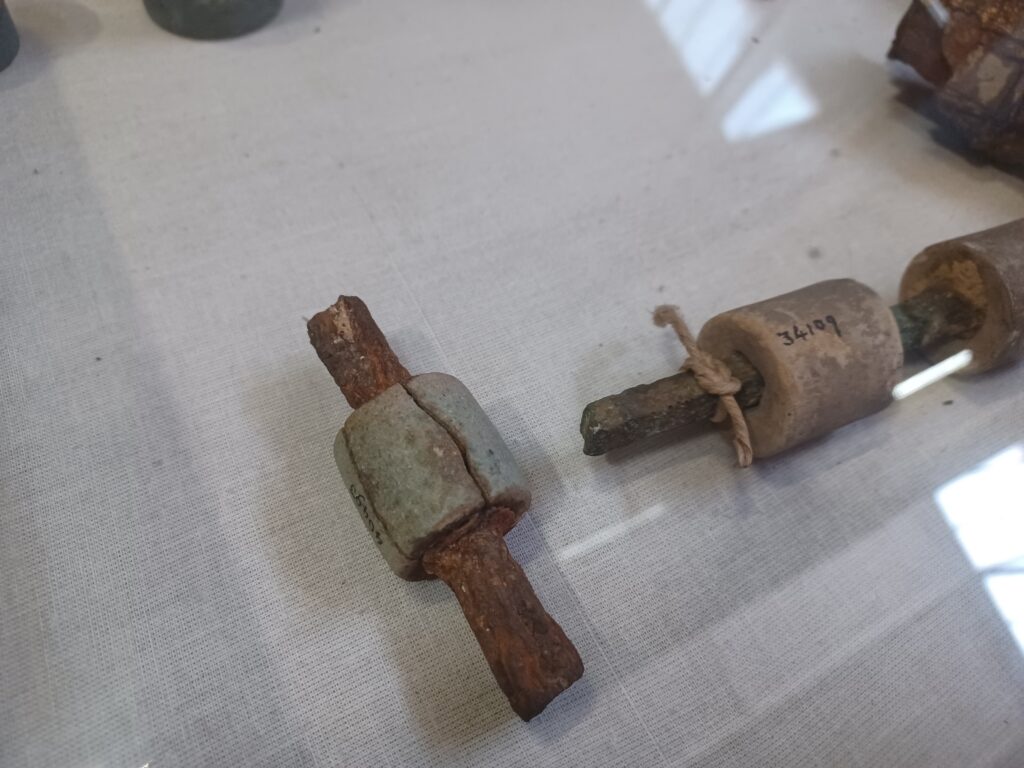
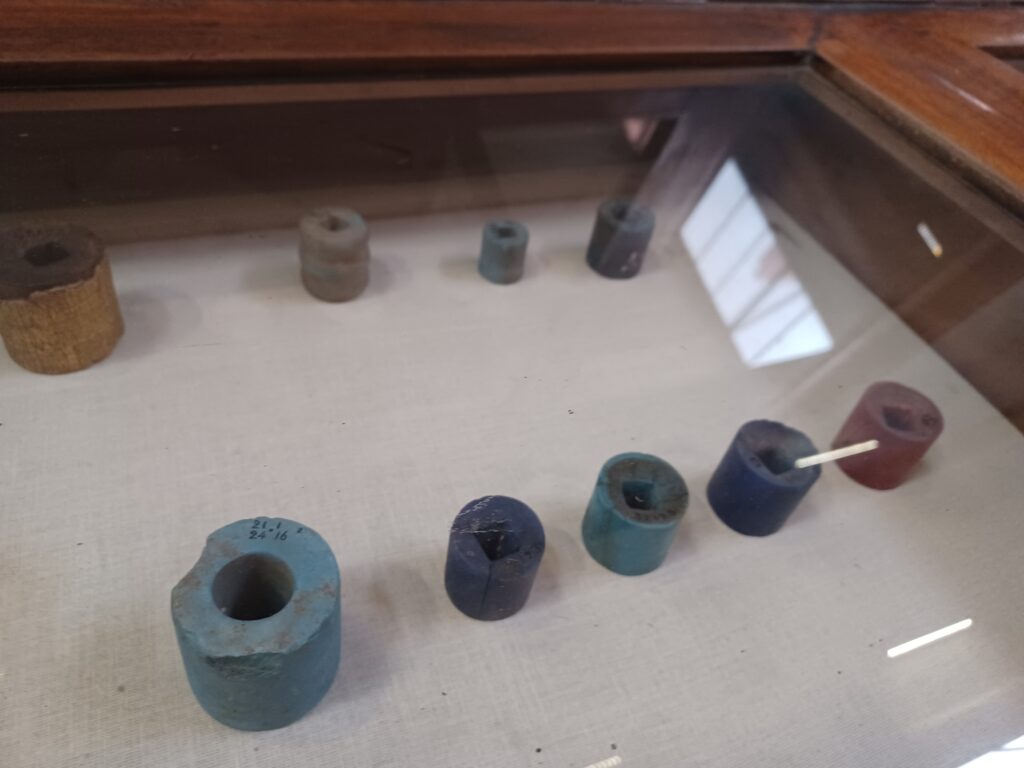
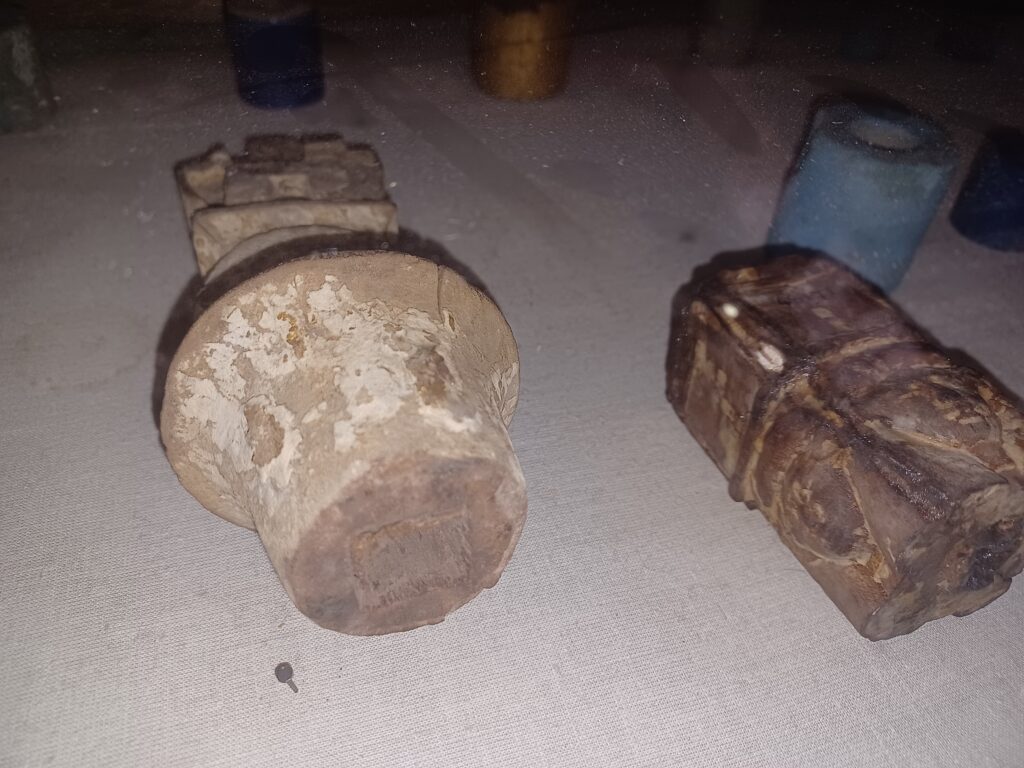
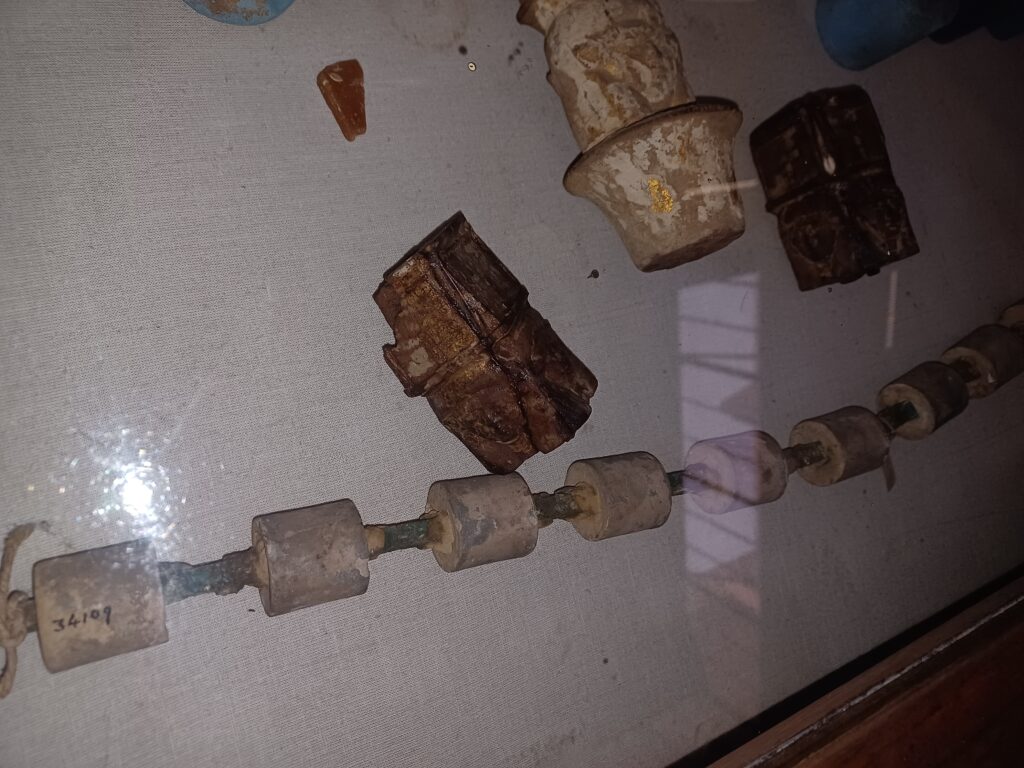
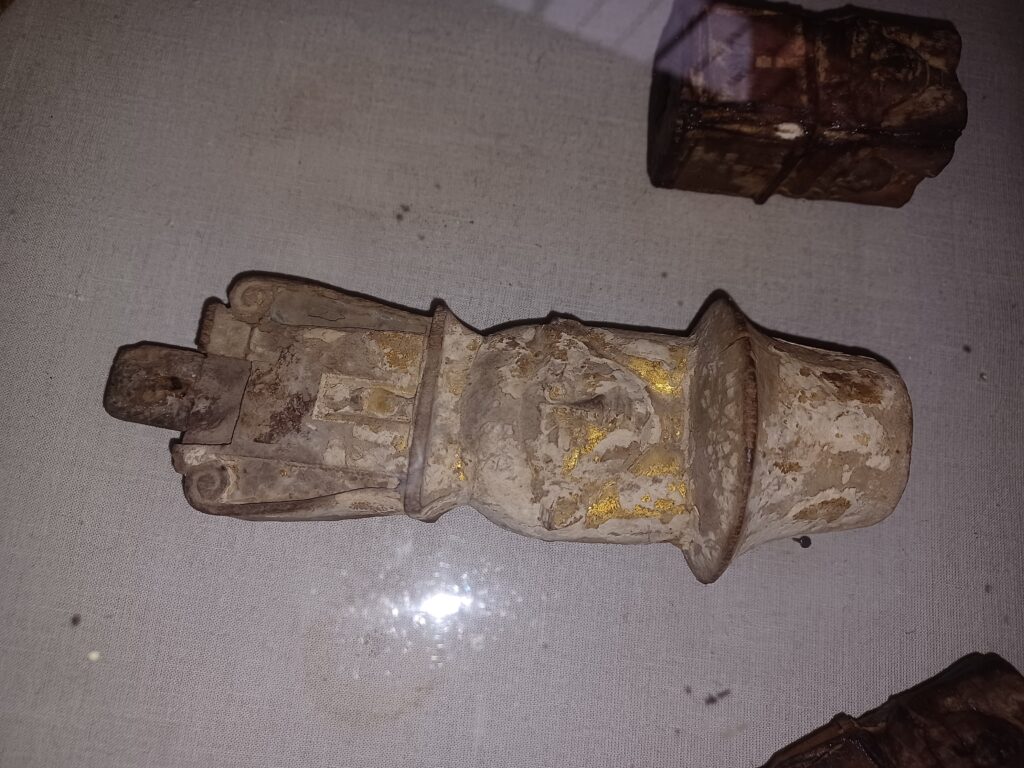
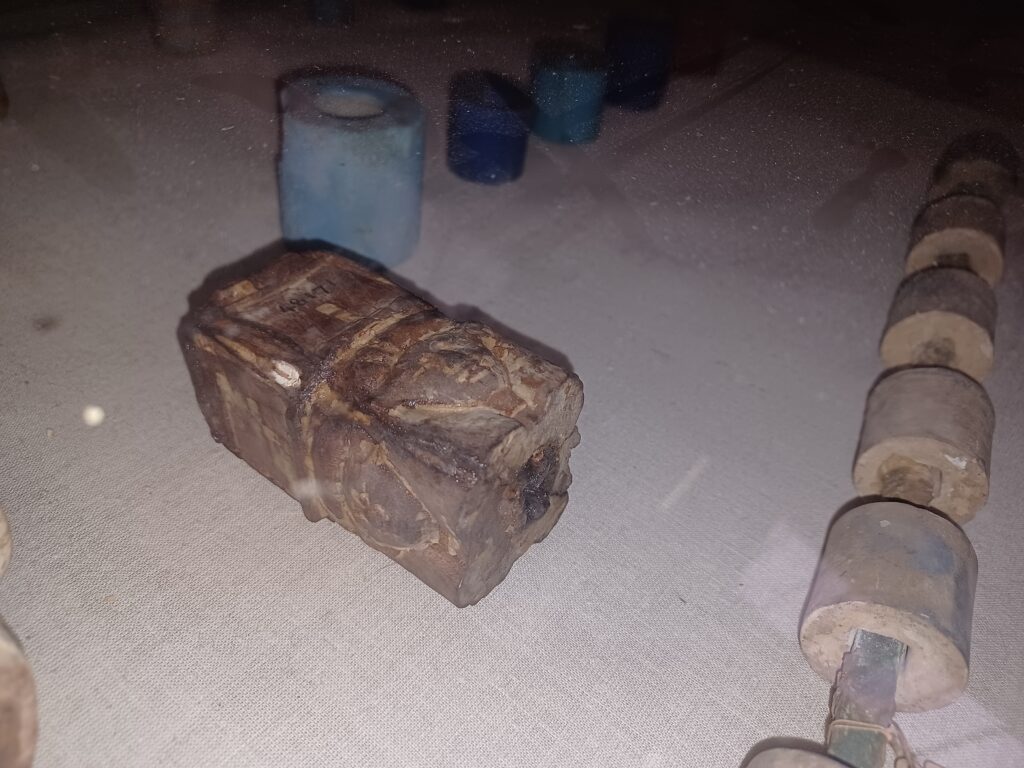
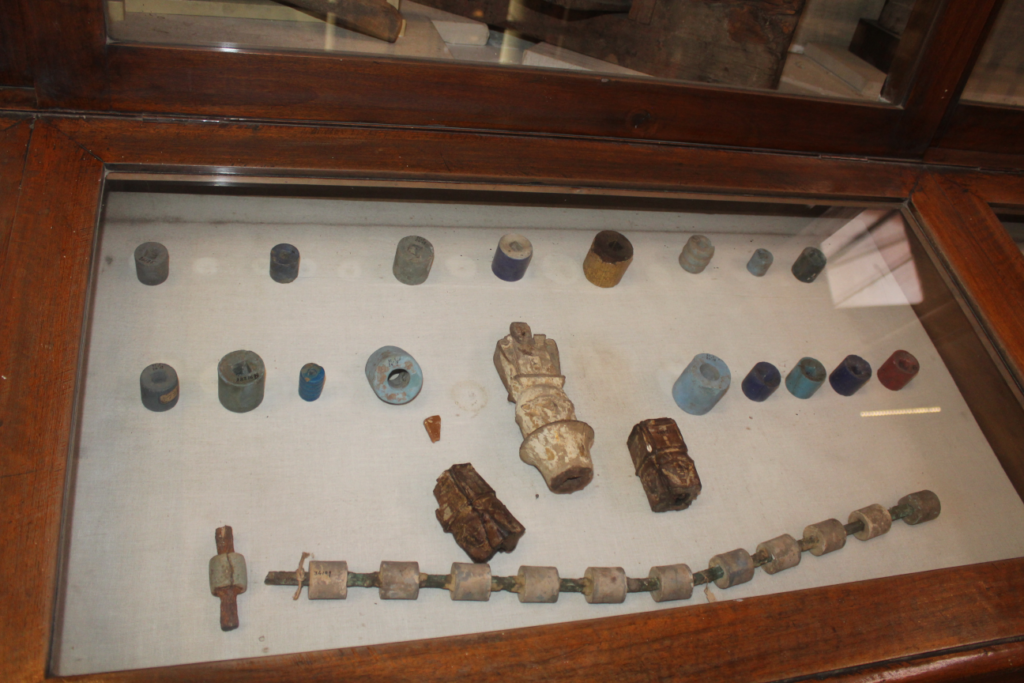
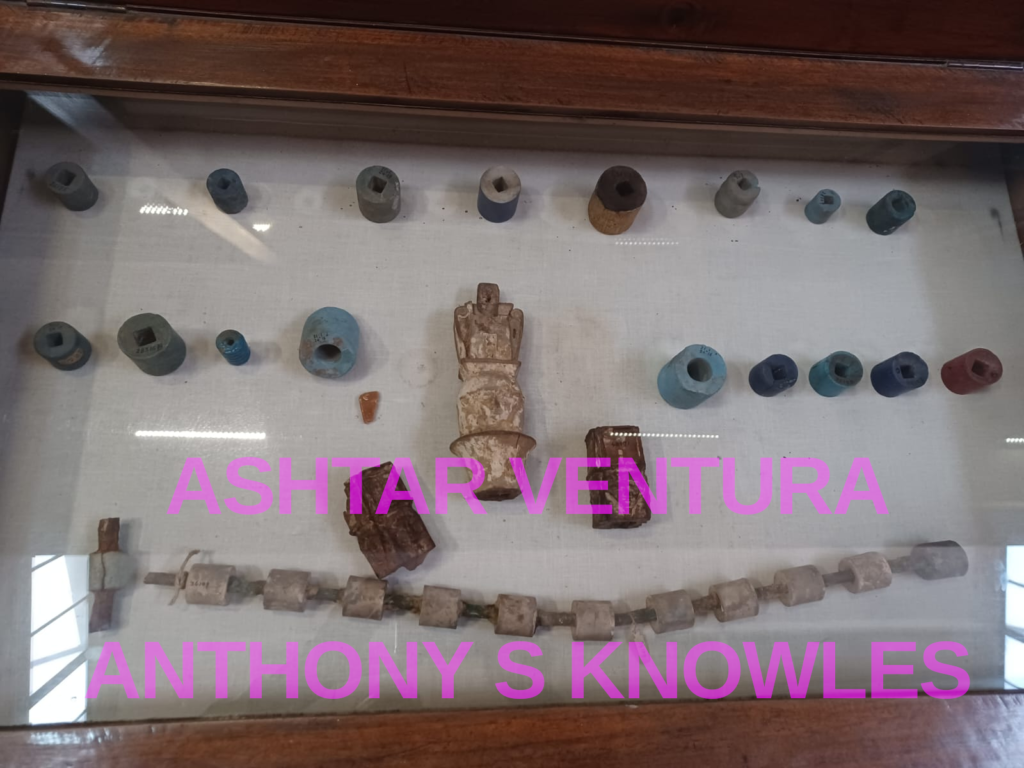
this arrangement matches the unlabeled artefacts i found in the Cairo museum: copper & iron rods with equidistantly-spaced cylinders around the rods, grouped with heads of HatHor “terminals(see below — i am also awaiting a reply from the ministry of tourism & antiquities regarding any information on them)

the undocumented, rarely-seen section:

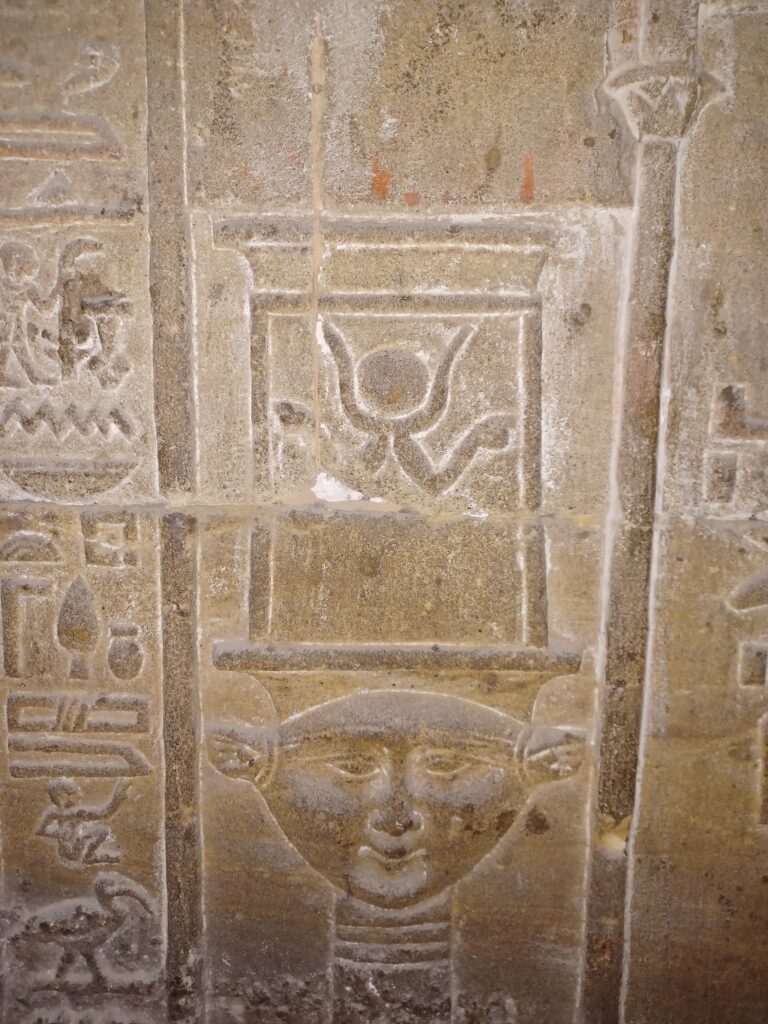
equidistantly-spaced cylinders around the cables (in contrast to a series of circles) the “terminals” are styled as heads of HatHor as usual, but the cables seem to terminate differently this variation too, a “flower” appears on the left bottom piece:

Unlabeled, rarely-seen museum artefacts match the device

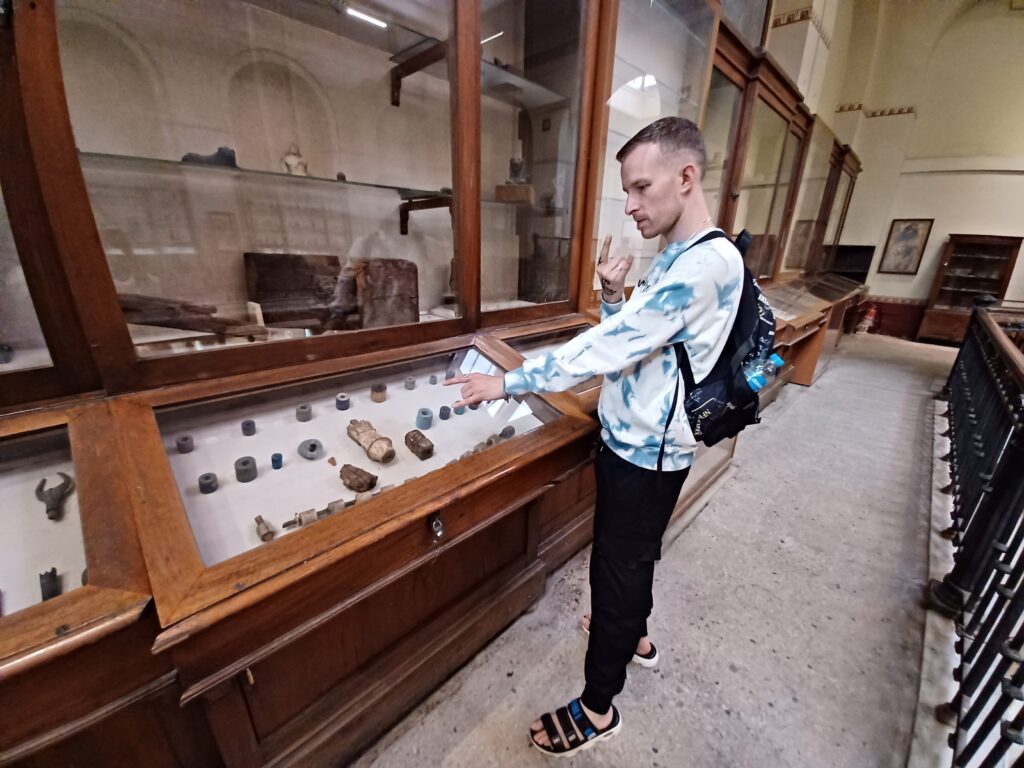
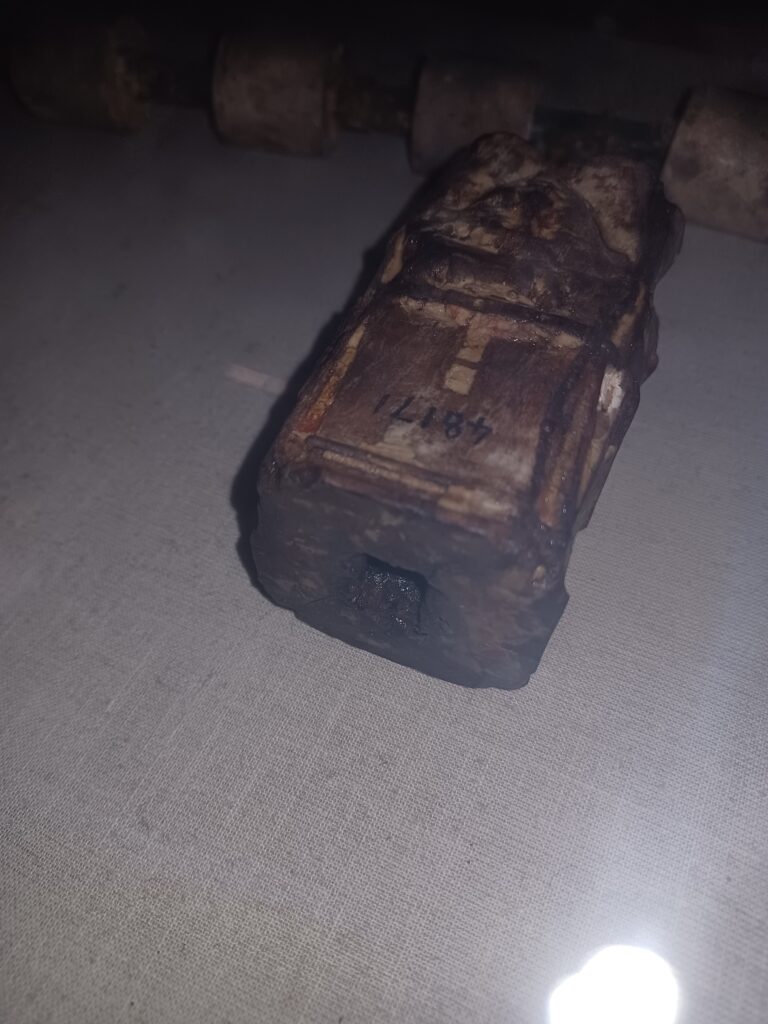
LOOK AT THIS AMAZING NECKLACE!!! <3 (the unlabeled cabinet i discovered in the Cairo museum — cannot find a photo of this anywhere else or any information on it)

iron rod, copper rod, equidistantly-spaced cylinders around the copper rod, and terminal-like parts styled as the heads of HatHor

the different variety of the cylinders and heads may indicate different usage and functions. some have square holes, some have round holes, some are different materials/colours, some have bulges, etc., and we see one type of cylinder used repeatedly along the copper rod. they also may have been experimenting to find optimal materials.

the copper and iron rods exhibit high levels of rust/oxidation — the iron rod in particular — possibly from immersion or exposure to fluids, for example using an iron rod surrounded by copper, in a jar filled with electrolytic fluid (grape juice, etc) similar to the “baghdad(/parthian) batteries”.

there most likely are many more related artefacts in their collection

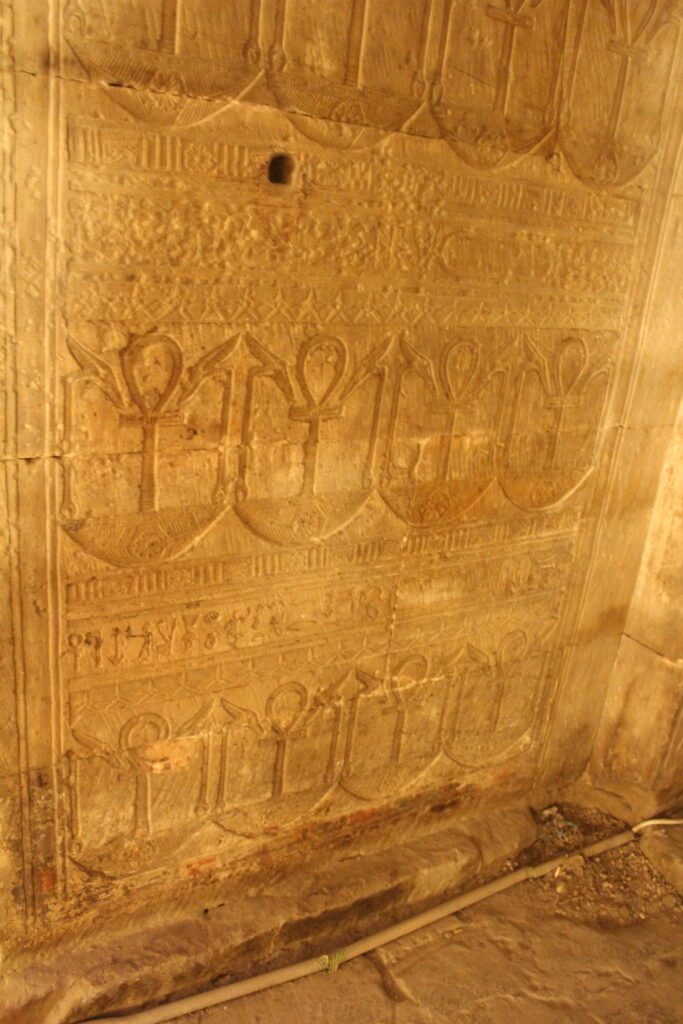
below is the mural variation from the crypt, the only other place it is depicted in the entire dendera complex, note here we do not see the equidistantly-spaced cylinders, nor the “flower” at the base of the left piece … possibly simplified elements … (the zig zag inside the circle is missing from A.Mariette’s 1870s drawing):

South Crypt mural, the so-called “menat necklace” (A.Mariette: “Crypte 4”)

Cases of Compartmentalised technology, secret inventions in Ancient temples such as in Alexandria, kept secret from lay worshippers, engineering the presence of gods

Statues in temples that would “cry blood”, there were thunder machines in temple roofs that would emulate the sound of thunder as a sign from the gods, altars for fire sacrifice that would cause a door to open when the fire was made — statues that animate — and even lesser known would be ritual objects and electrified statues that would either shock the common worshipper or cause a tingling sensation — and ones possibly with electrically-illuminated elements.

it is known that in various ancient temples including in Alexandria the initiates/elite priests of those temples sometimes exploited secret inventions & “magical” technology to create impressions on the lay people who came to worship, effectively engineering a sense that “the gods” were present, or that a prayer or sacrifice was answered, etc.

Much of this “temple technology” was kept compartmentalised & secret, it was for the initiates (maybe prescribing punishment of death for revealing secrets), and the common people were not taught these early “magical” technologies. The secrecy of the early esoteric temple technology was absolutely essential for the desired effect.

Consequences of this is that the technology is easily lost to the sands of time, after wars. in cases where we do find references, key pieces may be in a symbolic form which was only easily-understood by the initiates (i.e: Agastya Samhita listing “the neck of a peacock” ingredient, which was a symbolic reference to copper sulfate to make electrochemical jars, copper sulfate being the same colour as the neck of a peacock)

We have a few documented examples of related technology such as from Hero of Alexandria though there must have been much more, not least the public inventions lost to the destruction of the library of Alexandria, but also the secret temple technology which required strict secrecy of the inventions for them to be effective in maintaining the “presence of the gods” effect. It simply would not have the desired effect if people could see “the wizard pulling levers behind the curtain”

the Encrypted Ritual Objects of the HatHor temple Dendera were “Given Life” on Holy Days and Brought Up

In the case of the temple of HatHor at dendera, we know the crypts were for the initiates of the secrets, and the special “ritual objects” were kept down there, together with symbolic esoteric murals for the initiates:

Wolfgang Waitkus: “Die Texte in den Unteren Krypten des Hathortempels von Dendera” (Crypt East 1 A East Wall)

(“[Come] in peace, In-Secret-Initiate of holy places, young man [……rest destroyed]”)

Those “ritual objects” were brought up from the crypts only on specific festivals and holy days, and on those days it says they were “given life” in the crypt and brought up — the Ba/Ka (energies of life) were manifested in the idols on those special days, and the people rejoiced in reverence

Wolfgang Waitkus: “Die Texte in den Unteren Krypten des Hathortempels von Dendera” (with a dodgy google translate)

Given that we know Alexandria and other locations had “temple technology” to amaze the oblivious lay-people, it would make sense that the “Ritual Objects” that are “Given Life” from the crypts of the temple of HatHor most likely exhibited “magical” properties to engineer the sensation in the lay people that the gods were truly present on those special holy days, when they took the ritual objects to the roof and other places for a spectacle, a microcosmic ceremony where the images of the gods were “given life”, made themselves apparent, much more than just simply bringing up lifeless statues.

Huge key sections of the crypts have been hacked off, but even with what they left us we can see what appear to be symbolic references to technological devices, and possible archaeological evidence of electrical components for some of those devices in an unlabeled cabinet in the cairo museum (iron rod, copper rod, cylinders, HatHor head terminals).

The Agastya Samhita told us to use “the neck of a peacock” to make electricity, we now know it meant copper sulfate.

So what of harsomtus the serpent coming alive and being contained in the hn-container, supported by the anthropomorphised djed pillar, the “ba” and “ka” energy manifesting, etc.

One must strive to see these crypts through the eyes of the initiates of the secrets, not as a lay-person.

more to come, and will be updated with more sources, references, and connections…

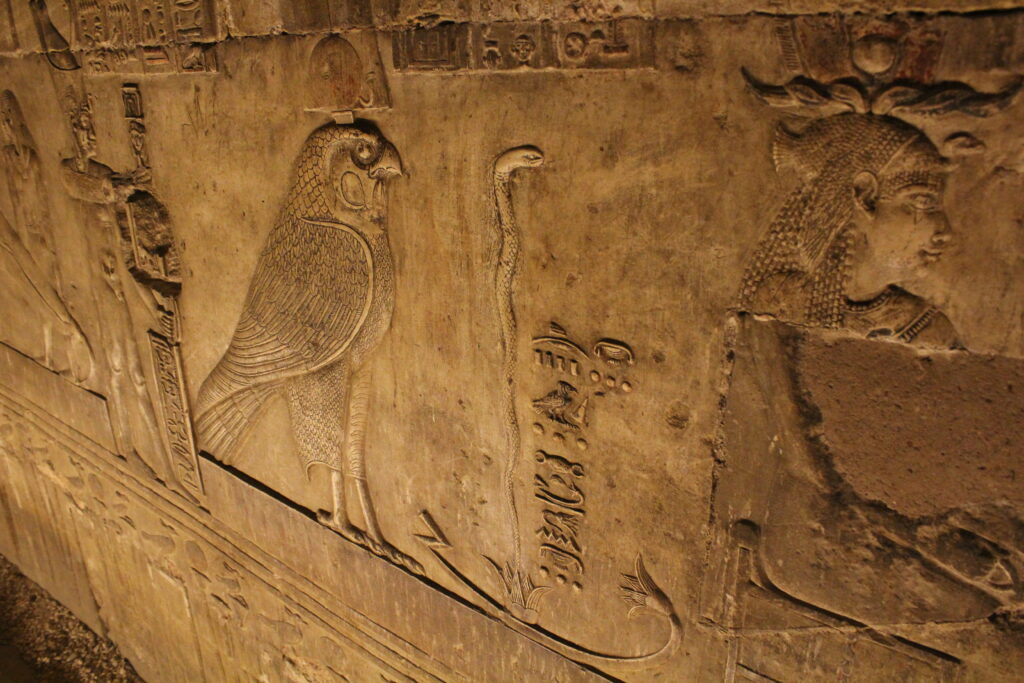
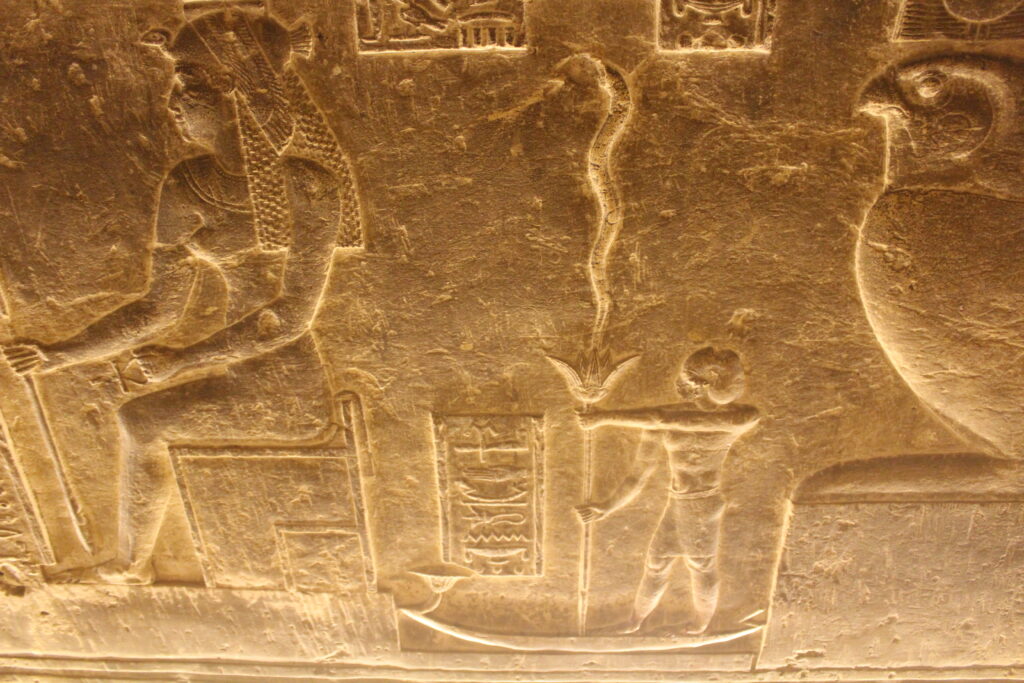
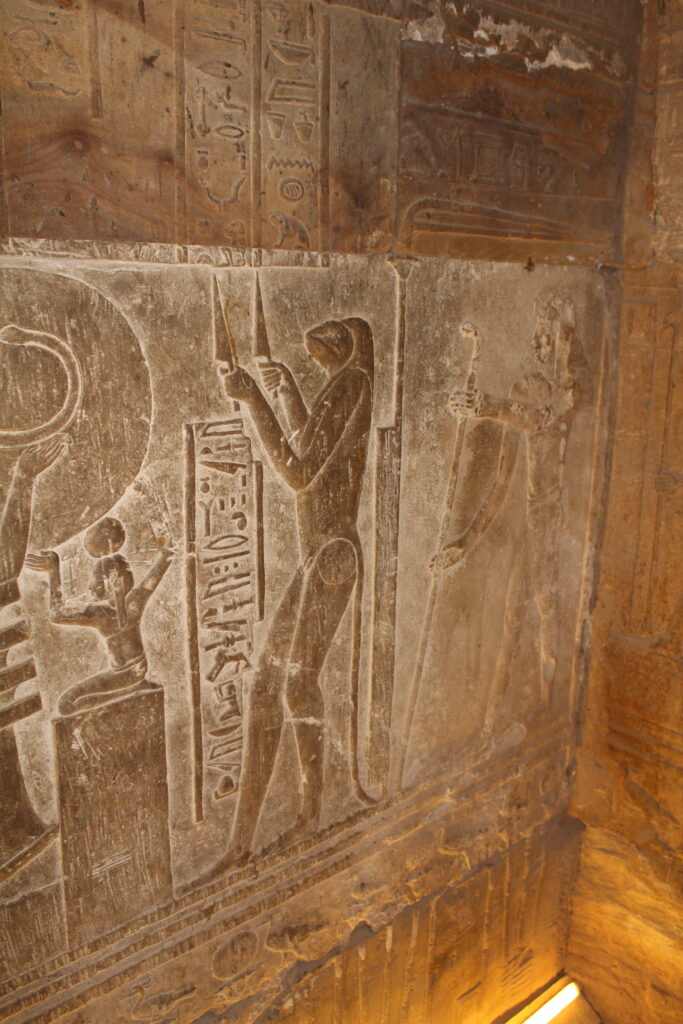
a small selection of many photos i took of mostly South Crypt (A.Mariette: “Crypte 4”), where the so-called “dendera light” mural is located, the same Crypt with the so-called “menat necklace” with cables coming out of the head terminals. All the main murals of West Crypt (“Crypte 7”) have been mostly hacked off

ALL RIGHTS RESERVED

Posted on Leave a comment

Egypt, HatHor, and Ancient Electricity.


SEE MY NEW VIDEO OF UNLABELED ARTEFACTS I FOUND IN THE EGYPTIAN MUSEUM IN CAIRO:

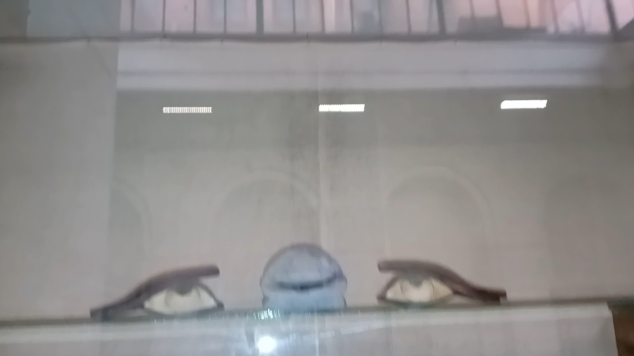
THESE HAVE NO DESCRIPTION AND THEY WERE PLACED AROUND ARTEFACTS OF THE HEAD OF HATHOR, AT THE TOP OF THIS MAIN CABINET THEY HAVE PLACED 2 EYES AROUND WHAT LOOKS LIKE A BLUE SCARAB, VERY SYMBOLIC:


::: NOTE: SINCE POSTING THIS IN HASTE I LEARNT MORE KEY PARTS, OBTAINED TRANSLATIONS, ETC. THERE ARE SOME INACCURACIES BELOW, AND ALSO THINGS I CAN EXPLAIN IN BETTER DETAIL WHEN I COME BACK TO FIX THIS, BUT THINGS FIT AS THEY SHOULD! :::

Crypt East 1 A East Wall:

“[Komme] in Frieden, In-Geheimes-Eingeweihter der
heiligen Stätten, Jüngling […… Rest zerstört]”

(“[Come] in peace, In-Secret-Initiate of holy places, young man [……rest destroyed]”)


this is a BIG UPDATE to my previous post concerning depictions of what i believe to be the “baghdad batteries” (electrolytic cells) symbolically depicted in the crypts of the temple of HatHor, dendera.

i will make a comprehensive video soon, in the meantime please explore this post.

i recently travelled to Egypt in March to April to see the temple of HatHor and the crypts there in-person. i also visited many other temples and the museums, of importance here is Cairo museum in El-tahrir square. i discovered much more than i expected.

to start, please check out my new 13 minute raw video below i filmed down “Crypte 4″ (A.Mariette) in the temple of HatHor, dandera. i have video of the other crypt “Crypte 7” (A.Mariette) which has all the main pieces destroyed/hacked off, i will upload that soon.

bear in mind THESE ARE CRYPTS, NOT TOMBS. these crypts hold ENCRYPTED INFORMATION reserved for the elite priests/priestesses of the time, INITIATES OF SECRETS, only they would be allowed down here, and they once held important “ritual” objects/devices/technology which have since been looted/destroyed/kept in private collections.

important note: SOME OTHER CRYPTS IN THIS TEMPLE WITH THE SAME NARROW LAYOUT HAS THE MAIN SECTIONS HACKED OFF AND REMOVED, SOMEONE DOES NOT WANT US TO SEE WHAT WAS THERE. IMAGES & VIDEO SOON.

What i observe here i believe to be the following (i may be going along the sections in reverse, or maybe not, but the information i can derive this way, starting from the “baghdad batteries”):

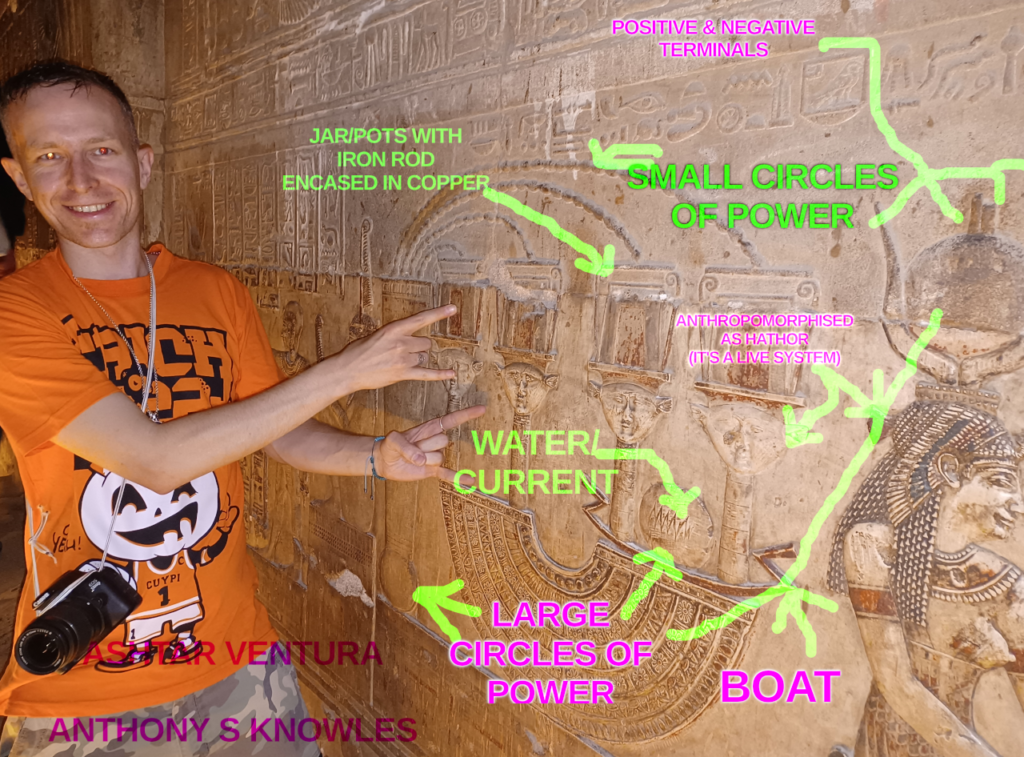
1. the so-called (HUGE) “Menat necklace” is depicting 4 “baghdad batteries” (more accurately electrolytic cells: a clay/other jar with an iron rod inside, the rod surrounded by copper, and filled with electrolyte fluid such as grape juice to create a small amount of electrochemical energy).

2. from these jars we see the “beads” which are small circles, representative of small amounts of energy moving to merge into the bigger piece on the left into the platform, to create a larger sum of energy.

3. between the 2 jars on the right, we see a large circle of power, on a boat, with the symbol for water (zig-zag) inside it. Hence, it is telling us the energy is like a water current flowing, moving, as if on a boat. We use the same terminology in modern times (electrical currents), and it can also relate to the use of electrolytic fluid (“water”) inside the jars (“baghdad batteries”)

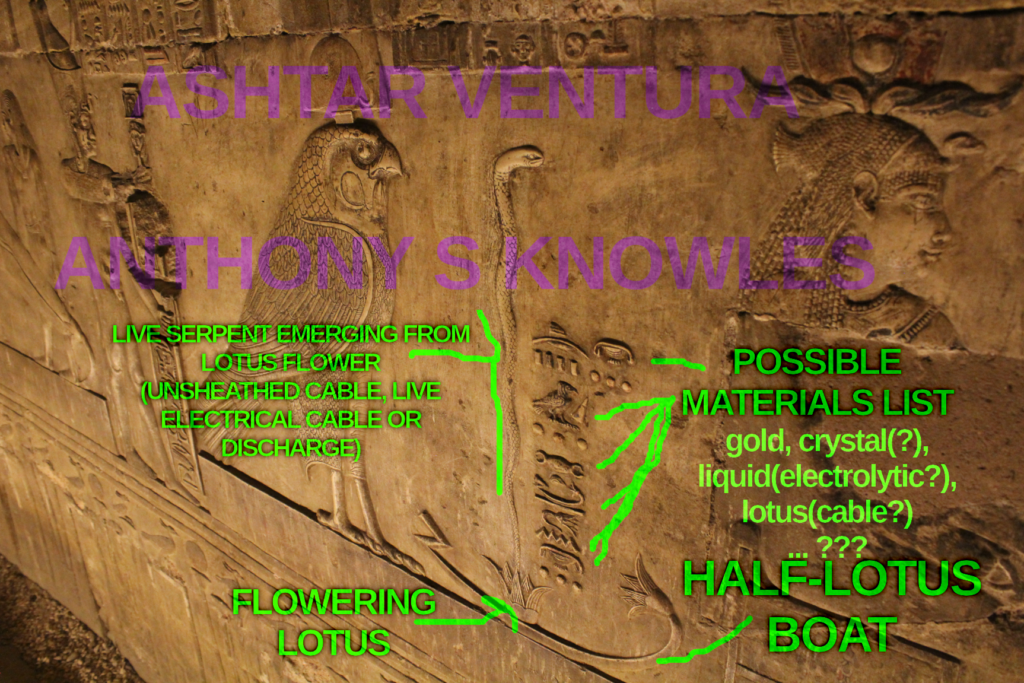
4. on the section to the left of this we see a boat with a lotus flower opening, and a live serpent emerges from the lotus flower. the lotus flower opening represents the un-insulated naked cable/resulting electrical discharge and the live serpent is live electricity or live wire — the boat in this section differs also in that it has a lotus flower as one of its sides.

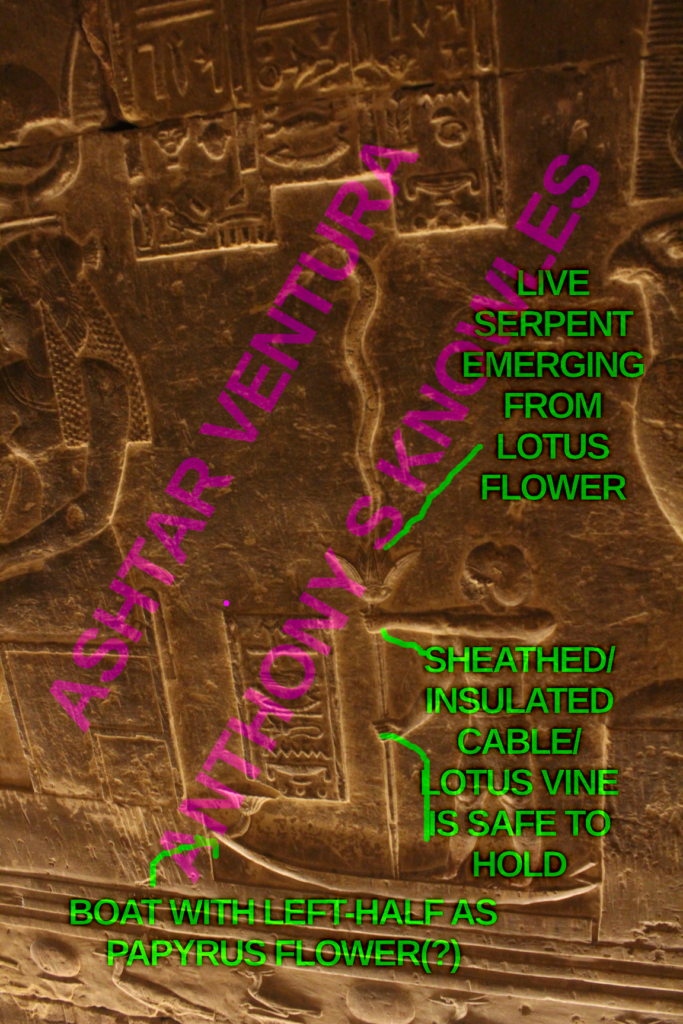
5. the section opposite (i interpret as the big picture “corresponding” section) the boat with a papyrus flower(?) has a similar set of symbolism, this time it has a person holding the “lotus vine” (i believe to be the sheatehed/insulated part of the cable — safe to hold), with the dangerous part of the wire/discharge coming out of the sheath which is symbolised as the LIVE serpent emerging from the lotus flower. they cannot touch the live serpent because they will get “bitten” (shocked).

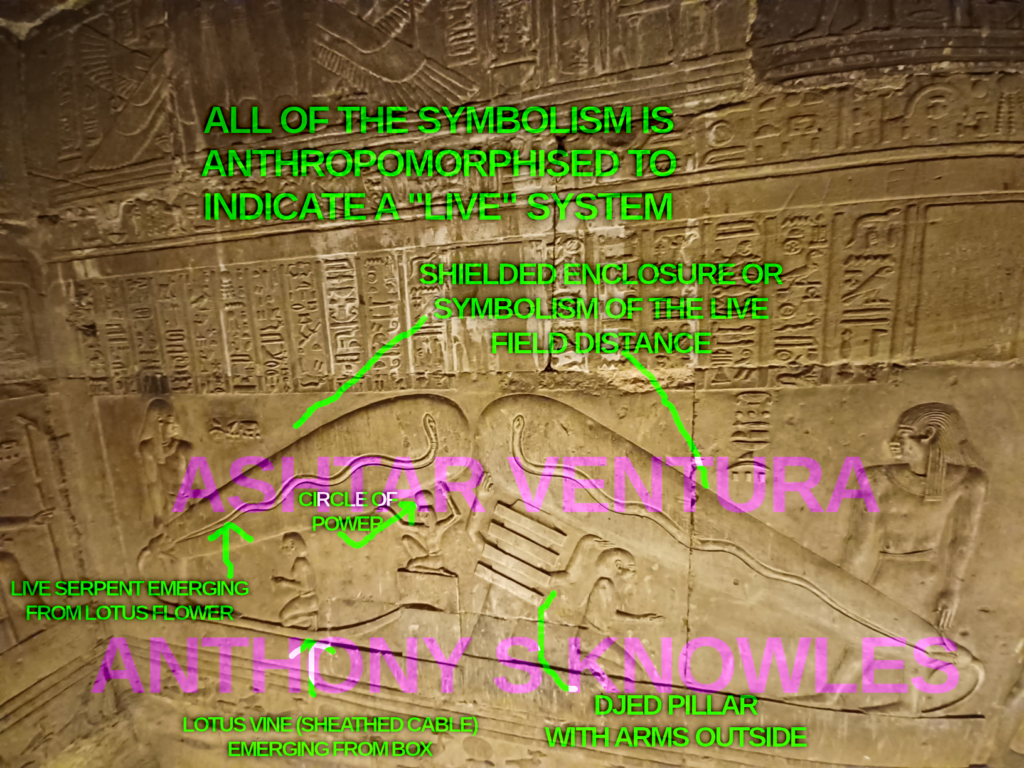
6. THE NEXT SECTION IS THE END OF THE LEFT SIDE OF THE CRYPT. THIS SECTION IS COMMONLY REFERRED TO AS THE “DENDERA LIGHTBULB” but it may be representing electrical generation and power in general, maybe a generator or other device harnessing the live serpent at both polarities.

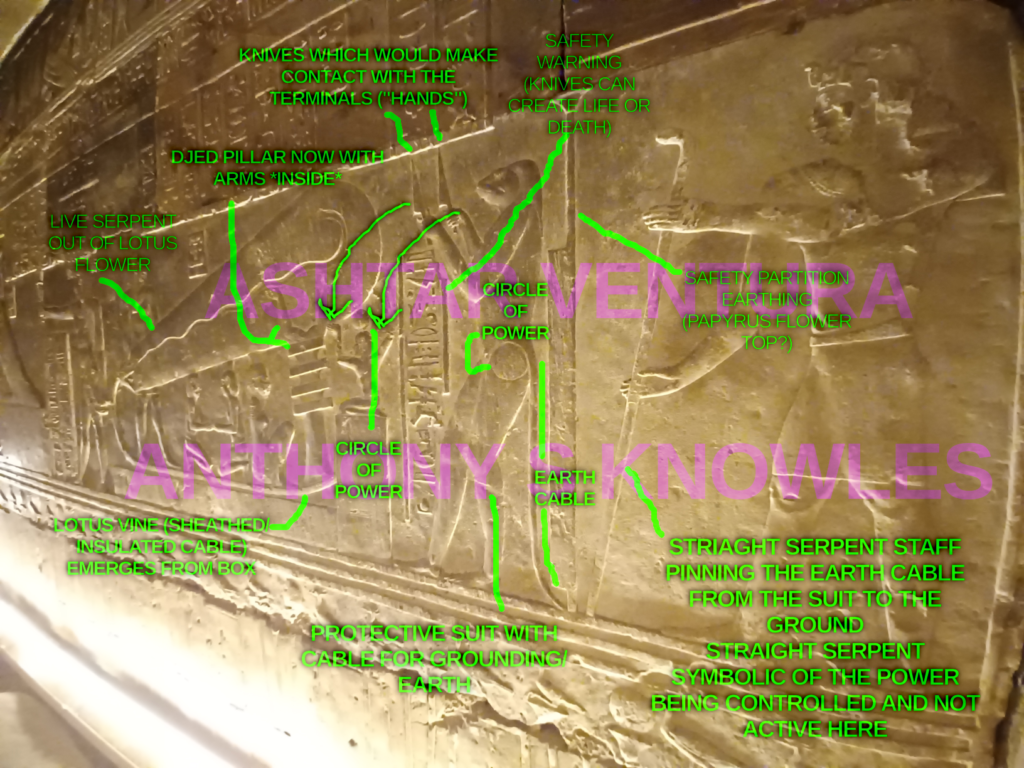
7. OPPOSITE THIS SECTION (what i interpret as the “correspondence”), WE SEE SOMEONE IN A PROTECTIVE SUIT BEING GROUNDED/EARTHED, BEHIND THEM IS A PERSON WITH A STRAIGHT SERPENT STAFF PINNING THEIR “TAIL” TO THE GROUND FIRMLY. STRAIGHT SERPENT SYMBOLIC OF THE POWER BEING CONTROLLED AND NO LONGER “LIVE”
THE PERSON IN THE SUIT HOLDS TWO KNIVES WHICH IF FOLLOWED VIA THE ARMS MOVING DOWNWARDS WOULD MAKE CONTACT WITH THE TWO TERMINALS (“HANDS”), THE HIEROGLYPHS NEXT TO THE PERSON IN THE SUIT INDICATE THAT THE KNIVES HAVE THE POWER TO CREATE LIFE OR DEATH
(they can start the system to generate the electricity, but it’s so dangerous it could kill someone if they use it wrong, hence he must be grounded, and protected)

will update this very soon, publishing now to get out there